

By Jori Chisholm • BagpipeLessons.com
Prefer the printable PDF? Download the free guide here — or keep reading for the whole thing below.
As a piper, one of the most critical skills you must develop is the art of steady blowing. This guide is designed to provide you with the knowledge and tools necessary to achieve a stable, consistent tone, which is fundamental to excellent bagpiping. Over the years, I have come to realize that steady blowing is the key not only to better sound and tuning but also to more enjoyable and controlled performances. In this guide, we will explore the importance of steady blowing, the techniques that will help you master it, and the tools that will aid your practice.
Watch the video that accompanies this guide: The Secret Blowing Technique Used By Top Pipers: The 80/20 Rule Revealed
The short version
After measuring the blowing patterns of more than two dozen elite pipers, I found they all use nearly the same rhythm: a full blow-breath cycle lasting 2.5 to 3 seconds, made up of roughly 80–85% exhale and 15–20% inhale. Long, steady blows into the bag. Short, quick breaths. I call it 80/20 Blowing.
It works because a fuller bag is easier to control, because you spend more of the cycle using your arm and your lungs together instead of your arm alone, and because a 2.5–3 second cycle matches the natural breathing rate of moderate exercise — so you can hold it for a full performance.
To practice it, set the Piper’s Metronome™ to 100 BPM in 5/4: blow for four beats, breathe on the fifth.
The Importance of Steady Blowing in Bagpiping
Steady blowing is the cornerstone of good piping. It refers to maintaining consistent air pressure inside the bagpipes to ensure that the tone remains stable and that the drones and chanter stay in tune. Without steady air pressure, your sound will waver, your chanter will go sharp or flat unpredictably, and your drones may fluctuate in volume. This inconsistency can make your pipes difficult to tune and your playing less enjoyable. Furthermore, an inconsistent flow can alter the volume and tonal quality of your instrument, leading to an unstable, wavering sound.
Why is steady blowing so essential? The answer lies in how bagpipes produce sound. The drones and chanter rely on a steady, uninterrupted flow of air to maintain a consistent pitch. Even slight fluctuations in air pressure can cause the pitch to rise or fall, resulting in tuning issues.
As a piper, your goal is to keep the drones and chanter sounding stable throughout your performance. This requires mastering the art of controlling the airflow into your bagpipes, balancing the pressure applied by blowing into the bag and squeezing the bag continuously with your arm. Achieving this balance will allow you to produce a smooth, resonant sound that is pleasing to the ear and easier to tune.
The Big Mystery: How Exactly Do Top Pipers Achieve Ultimate Steadiness?
Even after understanding the importance of steady blowing and using tools like the Bagpipe Gauge to monitor bag pressure, some unanswered questions still remain: How exactly should you blow into the bag? Should you use short, quick blows followed by short, quick breaths, or is it more effective to use long, steady blows with deep inhales? There’s a wide range of advice you’ll hear, with different pipers recommending different approaches. So the question remains: Is there an optimal way to blow into the bag for the best results? The answer may lie in observing the professionals.
Take Donald MacPherson, for example, who is widely considered one of the greatest solo pipers of all time and is credited with helping shape the modern bagpipe sound. His tone was full, rich, and perfectly steady, with tuning that remained locked in even during the most demanding tunes. MacPherson achieved a level of quality and steadiness that was decades ahead of his peers. While his instrument setup and reed choices certainly played a role, was there something different about how he blew into his pipes? Watching videos of MacPherson reveals something dramatic: long, steady exhales and quick, efficient inhales.
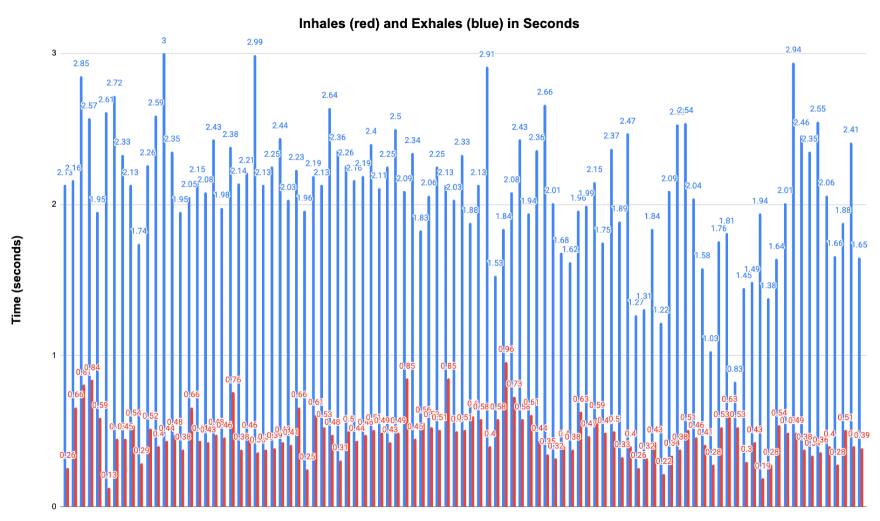
Intrigued by this, I started examining other top pipers, both from today and the past. YouTube has been a fantastic resource, offering close-up views of pipers’ faces where their blowing patterns are clearly visible. This inspired a research project where I measured the blowing patterns of more than two dozen elite pipers. I meticulously timed the length of their blows and inhales, accumulating a wealth of data that surprised me.
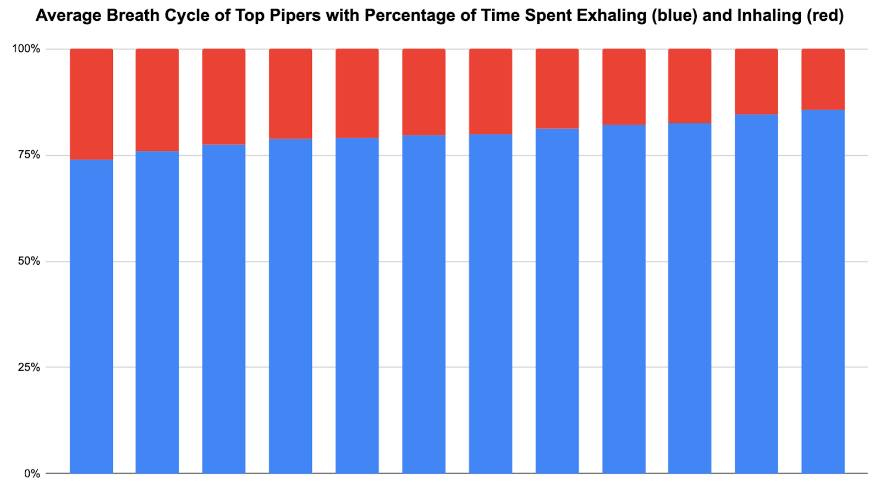
What I found was remarkable consistency: Across performances and players, the variability in blowing patterns was minimal. These top pipers all seemed to follow a similar pattern, and it wasn’t random. There was a consistent ratio of blowing to breathing, and the total cycle length — one complete inhale and exhale — was also very similar across players.
The Blowing Secret of Top Pipers: The 80/20 Rule
After analyzing all the data, I discovered that the optimal cycle length for top players typically ranged from 2.5 to 3 seconds, with a consistent ratio of 80–85% exhale and 15–20% inhale. This means that these players use long, steady blows, followed by very short, quick breaths. This secret — the 80/20 blowing ratio — appears to be the key to achieving the kind of stability, tone quality, and tuning precision that defines the world’s best pipers.
Hiding right there in plain sight, the world’s top pipers are all using a nearly identical pattern of blowing — a technique I call “80/20 Blowing.” This involves spending approximately 80% of your time blowing air into the bag and 20% taking a breath. The goal is to maintain consistent air pressure by coordinating your breathing cycles. This rhythm helps you find the optimal blowing and breathing proportion and the optimal overall cycle length, preventing inconsistent pressure and a compromised sound.
Why Is 80/20 Blowing So Effective?
The 80/20 blowing cycle is highly effective for a few important reasons. First and foremost, it helps prevent large pressure fluctuations by ensuring your bag stays consistently full of air. A full bag is easier to control, and this technique minimizes the risk of pressure spikes or drops that can lead to tonal inconsistencies. By maintaining a steady, long blow for 80% of the cycle, you’re keeping the bag pressure stable, allowing for better control over your tone and tuning.
One key advantage of this cycle is that it maximizes the time you’re using both your arm and blowing muscles together to maintain pressure. When you blow, you’re not just filling the bag — you’re actively helping to sustain the pressure alongside the squeeze from your arm. This combination of arm and breath control is stronger and more stable than relying on the arm alone. Of course, you have to take a breath, but by keeping it short (20% of the cycle), you minimize the amount of time your arm has to maintain pressure by itself. When you rely solely on your arm, it can tire quickly and cause fluctuations in pressure. But by working both the arm and lungs together, you gain more strength, power, and stability in your playing.
Additionally, the short, quick breath during the 20% inhale is efficient because there’s no resistance — you’re simply pulling in air, which is easy and fast. On the other hand, blowing into the bag requires more control because you’re working against the pressure already present in the bag. You need to blow to perfectly match the bag’s current pressure, ensuring you don’t create a pressure spike. This is why a long, slow, steady exhale into the bag is so important — it allows you to regulate the airflow in a controlled, consistent way, helping to maintain the optimal pressure.
It’s essential that the blowing rate not only works for your bagpipes but also for you as a player. You need to ensure you’re getting enough oxygen so you can comfortably play for extended periods, whether in practice or performance. The total cycle time of 2.5 to 3 seconds matches perfectly with the breathing rate typically observed in moderate-intensity exercise. This is a rhythm that most people can sustain for around 20 minutes if they’re not in peak shape, and between 30 minutes to an hour for those who are more physically fit. By aligning your breathing pattern with this natural rhythm, you ensure that you’re not only keeping your pipes steady but also keeping yourself physically comfortable for longer performances.
Tools to Enhance Your Practice
While the 80/20 Rule provides an excellent framework for improving your steady blowing, there are several tools that can greatly enhance your practice and help you achieve more consistent results.
Piper’s Metronome™
To effectively practice the 80/20 cycle, I recommend using the Piper’s Metronome™ set at 100 beats per minute (BPM) with a 5/4 time signature. This creates a five-beat cycle, where you blow for four beats and take a quick breath on the fifth beat. You can set Accents on the first and fifth beats to clearly distinguish when to blow and when to take a breath. This setup trains your body to develop a natural rhythm, helping to regulate air pressure more consistently over time. By practicing with this metronome configuration, you’ll gain muscle memory and improve your ability to maintain steady air pressure, which is crucial for achieving optimal tone and tuning stability in your playing.
Bagpipe Gauge
One of the most valuable tools for improving steady blowing is a Bagpipe Gauge. This simple device plugs into one of your drones and measures the air pressure inside your bagpipes. By monitoring the gauge as you play, you can get immediate feedback on your consistency. Ideally, the needle on the gauge should remain as stable as possible. If the needle jumps or fluctuates significantly, it’s a sign that you need to work on controlling your airflow more evenly.
The Bagpipe Gauge can also help you determine whether your pipes are set up correctly for your strength. If you find that you’re constantly struggling to maintain the right pressure, it may be worth adjusting your reeds or setup to make your pipes easier to play. Many pipers struggle because their pipes are too hard, and a Bagpipe Gauge can help you determine if this is the case.
Mouth & Lip Trainer
Steady blowing requires strong muscles in both your lips and your arm. To strengthen the muscles around your lips, I recommend using something like this Mouth and Lip Trainer. Originally designed for brass players, this tool is equally effective for pipers. It works by providing resistance when you grip it with your lips, helping to build the muscle strength needed to maintain consistent pressure while blowing.
You can use the trainer in two ways: 1) Hold the narrow end between your lips as long as you can. 2) Place the wider end inside your mouth behind your lips and pull on it gently, maintaining tension. Over time, these exercises will improve your lip strength, making it easier to sustain steady air pressure. You’ll notice that as your facial muscles get stronger, you’ll be able to blow more consistently with less fatigue.
6″ Exercise Ball
In addition to strengthening your lips, you also need to develop endurance in your arm, which is responsible for squeezing the bag. A great tool is this 6″ exercise ball — typically a small, soft ball used for Pilates or general exercise. By practicing squeezing the ball with your arm, you can simulate the motion of squeezing the bag, helping to build the necessary muscle endurance for steady playing.
This exercise is especially helpful because it allows you to practice the motion of squeezing without the added complexity of playing the pipes. You can focus entirely on developing strength and endurance in your arm, which will make it easier to maintain steady pressure while playing. You can also use the ball while practicing your chanter, which helps you maintain the relaxation needed in your fingers even when squeezing.
Developing Muscle Memory for Steady Blowing
Like any physical skill, steady blowing should become second nature through practice. The more you practice the 80/20 blow-breath cycle, the more your body will learn to perform the action automatically. This is known as muscle memory — your body learns the motion, and you no longer have to consciously think about each step. Instead, you can focus on your playing and expression, while your blowing remains consistent.
In the beginning, you may find it challenging to maintain the blow-breath rhythm for extended periods. You might notice fatigue in your lips or arm as your muscles adjust to the new demands. This is perfectly normal. Over time, as your strength and endurance improve, you’ll be able to sustain steady pressure for longer sessions without feeling fatigued.
Insights from Professional Pipers
One of the reasons I became passionate about steady blowing is from observing the world’s top pipers. Top professional pipers have an incredible ability to control their air pressure with almost no fluctuation. Their pipes sound rock-solid, and their tone is consistently rich and sweet, particularly on sensitive notes like the high A.
When I’ve had the chance to play some of their pipes, I found that while their setups were efficient, the real difference lay in their ability to control pressure. These top pipers have trained themselves to blow with remarkable precision, and this consistency is what allows them to achieve such a high level of tone and tuning stability. This level of control doesn’t come from a special setup; it comes from mastering steady blowing.
Putting It All Together
Mastering steady blowing is one of the most important skills you can develop as a piper. By practicing the 80/20 blow-breath cycle, using the Piper’s Metronome™, the Bagpipe Gauge, mouth and lip trainer, and exercise ball, and building your strength over time, you will gain the ability to maintain consistent air pressure in your pipes. This consistency will lead to better tuning, a richer tone, and a more enjoyable playing experience.
Steady blowing takes time and patience to master, but the rewards are immense. Once you’ve developed the ability to control your air pressure without thinking about it, you’ll find that your overall piping improves dramatically. You’ll be able to focus more on your music, express yourself more freely, and enjoy the sound of your pipes as they resonate with a stable, rich tone.
I encourage you to stick with these exercises and practice regularly. Over time, you will see significant improvements in your blowing, and your playing will reach a new level of professionalism. Keep at it, and feel free to reach out with any questions or for further guidance on your journey to mastering steady blowing.
Related Guides
If steady blowing is what you’re working on, these will help too:
- How to Achieve a World-Class Bagpipe Sound — where steady pressure fits into the bigger picture of tone.
- The Ultimate Guide to Set Up and Maintain Your Drone Reeds Like a Pro — because pipes that are set up badly make steady blowing far harder than it needs to be.
- Secrets for Making Your Pipes Easy to Play — if you’re fighting your instrument, start here.
- The Secret Blowing Technique Used By Top Pipers: The 80/20 Rule Revealed — the companion video lesson.
Frequently Asked Questions
What is the 80/20 rule for bagpipe blowing?
The 80/20 rule means spending about 80% of each blow-breath cycle blowing air into the bag and about 20% taking a breath. I found this pattern by measuring the blowing of more than two dozen elite pipers, who consistently used 80–85% exhale and 15–20% inhale.
How long should a bagpipe blowing cycle be?
Between 2.5 and 3 seconds for one complete inhale and exhale. That range matched almost every top piper I measured, and it lines up with the breathing rate of moderate-intensity exercise, so it’s sustainable for a full performance.
Why does steady blowing matter so much on the bagpipes?
The drones and chanter need uninterrupted, consistent air pressure to hold their pitch. Even small pressure changes push notes sharp or flat and make the pipes hard to tune. Steady pressure is what produces a stable, resonant sound.
How do you practice the 80/20 blowing rule?
Set the Piper’s Metronome™ to 100 BPM in 5/4 time, with accents on beats one and five. Blow for four beats, breathe on the fifth. A Bagpipe Gauge gives you visual feedback — the needle should stay as steady as possible.
Why is a short breath better than a long one?
Two reasons. Inhaling has no resistance, so it’s fast and easy — there’s no reason to spend more time on it. And every moment you’re not blowing, your arm alone is holding the pressure, which tires quickly and causes fluctuations. Keeping the breath short means your arm and lungs work together for most of the cycle.
Want to Learn More?
Join my BagpipeLessons.com Inner Circle. It’s the ultimate way to learn faster and find greater enjoyment in your piping. You’ll get access to weekly LIVE online classes where you can get fast answers to your questions, plus unlimited access to my massive Online Lesson Library with hundreds of hours of recorded lessons, tunes, and workshops. Join a supportive community of pipers from around the world and start reaching your full potential today.
Want the printable PDF version of this guide? Download it free here.
About Jori Chisholm
Jori Chisholm is a world-renowned American professional bagpipe player and teacher. He played with the six-time Grade One World Champion Simon Fraser University Pipe Band for 19 years and was a featured solo performer for the band on multiple occasions. He is a successful solo competitor, winning the United States Gold Medal four times and winning top prizes at many top competitions including the Northern Meeting at Inverness, the Argyllshire Gathering in Oban, the Royal Braemar Gathering, and the Cowal Highland Gathering.
Jori started BagpipeLessons.com in 1999, in hopes of bringing pipers of all levels and experience valuable, trusted information, tools, support, and inspiration. In 2003, Jori was the first piper to teach bagpipes online. He has been featured in a New York Times front page story about the growth of online music lessons. Jori also founded the world’s first online-only piping and drumming competition, the World Piping and Drumming Championships, which has become a highly popular and celebrated event.
Jori has invented several popular, award-winning, and patented products for pipers including the Tone Protector™ chanter cap with two-way humidity control (Pipes|Drums Product of the Decade Runner Up), the Tone Protector™ Reed Case (Pipes|Drums Product of the Year), InTune Mic™: the world’s first wireless clip-on instrument microphone for smartphones, the Bagpipe Gauge, the Piper’s Ultimate Reed Poker, the Piper’s Advantage™ Bagpipe Phone Mount, and the Piper’s Metronome™. Jori lives in Seattle, Washington with his wife and two sons and enjoys traveling, exploring the great outdoors, and of course, music of all kinds.