

Is Your Pipe Chanter Holding You Back? Try the Infinity Chanter: Smaller Holes, Cleaner Execution - BagpipeLessons.com

Is Your Pipe Chanter Holding You Back? Try The Infinity Chanter: Smaller Holes, Cleaner Execution

by Jori Chisholm, Founder of BagpipeLessons.com
Last Updated: March 14, 2026

What if your pipe chanter makes it hard to play clean?
 
Over the past few decades, many pipe chanter holes have gotten bigger and bigger. The idea was more volume and a brighter sound, but the trade-off is real:
  • Bigger holes are harder to cover
  • Spacing forces your fingers to stretch farther
  • If you don’t seal a hole 100%, you get chirps, squeals, crossing noises, and sloppy-sounding technique

In this video, I explain why so many pipers feel like they’re fighting their instrument (chirps off high A, sloppy doublings, struggling to cover low G, trouble in cold weather).

Watch the video below.

Read the full video transcript below.

Follow BagpipeLessons.com on your Favorite Platforms:

Video Transcript: Hey everybody, Jori Chisholm here.

What if I told you that the pipe chanter you’re playing right now is actually making it harder for you to play clean, that the holes are bigger than they need to be, and that it’s costing you comfort, precision, and maybe even some confidence every time you play your pipes?

Today, I’m going to show you why this is true, how this happened, and what you can do about it.

I’ve been teaching pipers for over 30 years—thousands of students from around the world—and there’s a frustration that I hear really often. Most pipers don’t even realize what’s causing it.

They say things like, “My doublings aren’t clean. I keep getting chirps when I come off the high A. I can’t cover the holes in cold weather. I have a hard time reaching to cover low G. I feel like I’m fighting my instrument.”

And here’s also what I hear: pipers blame themselves. They think it’s a technique problem. They think they need to practice more. They think they lack ability or that their fingers just don’t have what it takes to play with correct, clean, and consistent technique.

But that’s not it. That’s not it for most of them.

The real problem is right in your pipe chanter—in the holes.

Over the past few decades, pipe chanter holes have been getting bigger and bigger. The idea was that bigger holes would produce more volume and a brighter sound that projects better for the modern pipe band competition scene.

But there’s a trade-off that nobody talked about.

Bigger holes are harder to cover. Your fingers have to stretch wider. You need to be more precise to seal the holes completely. And if you don’t cover a hole 100%, you can get chirps and squeals, crossing noises, and other sloppy-sounding technique.

Just think about how much easier it is to play the practice chanter compared to the pipe chanter. It’s not just the blowing and the squeezing that makes playing the full bagpipes harder than the practice chanter. The biggest factor is the size of the holes.

Some modern pipe chanters have holes that are up to 40% larger than they need to be for the sound they produce. That’s not a small difference. That’s your finger pads barely able to cover the hole. Now, this is really the most important on the lowest notes, where the holes are the biggest and the fingers you use to cover them are the smallest.

Now add in cold weather. Your fingers are stiff, a little bit less responsive. Add nerves right before a competition—your hands can get tight. Or think about the fast, precise finger work that you need to play in your most fun, most exciting, most challenging tunes, where every doubling and grip and birl needs to be precise.

Now suddenly your instrument is fighting against you, and you’re having a hard time just enjoying your performance and playing music.

Here’s what pipers think but rarely say out loud:

“I’ve been playing for years and my technique is still sloppy. Maybe I’m just not good enough. My instructor keeps telling me to clean up my fingerwork, and I’m trying, but it’s not getting better. I watch videos of these great pipers and they make it look so effortless. I feel like I’m just fighting just to cover the holes.”

So if any of this sounds familiar to you, I want you to hear what I’m saying.

The problem might be your pipe chanter. The holes are too big, and they’re spaced too far apart.

But the good news is there’s a great solution. I’ve known about this problem for many years. I struggled with it myself. I’ve watched my students struggle with it. Several years ago, I reached out to some of the world’s top bagpipe makers, and I asked them, “Can you make a chanter that has a great modern sound that’s stable and projects with that bright, crisp tone that we love, but with smaller holes that are more comfortable to play?”

The answer I kept getting back was, “A great sound requires big holes. You can’t have both.”

I didn’t want to accept that. I thought, “There has to be a way.” And then one day I got an email from Alastair Dunn at the world-famous bagpipe makers R.G. Hardie & Company in Scotland.  He said, “Jori, I’ve been working on something, and I think you’re going to want to try it.”

He sent me a new pipe chanter that he’d been working on. I opened up the box. I looked at the holes. They were noticeably smaller, closer together. And on the Blackwood version, which I’m going to show you in a second here, the hole edges are smooth and sanded. It just feels incredible under your fingers.  And I thought, “This is amazing—but how does it sound?”

This here is the Infinity Pipe Chanter by R.G. Hardie & Company. And it is, I’m not exaggerating, the most comfortable chanter I have ever played.

Let me show you what makes it special. Smaller holes, tighter spacing, smoother hole edges. The Infinity Pipe Chanter’s holes are up to 40% smaller than other modern chanters. The spacing is tighter, so your fingers don’t have to stretch as far.  And the Blackwood model—this is my favorite—every hole edge has been smoothly sanded. There are no sharp edges.

The first time you play this chanter, it feels like an old, trusted chanter you’ve been playing for years. You will feel the difference immediately. Your fingers cover the holes naturally, completely—without stretching, without needing to press very hard, without fighting for a seal.

You get cleaner, easier execution. The first time I played the Infinity Chanter, I heard clearer, crisper, more consistent technique instantly. Doublings, grips, taorluaths, birls—everything.

And here’s another thing that I was not expecting: this chanter does not squeal or chirp.  I’ve had other chanters in the past that had a good sound, but just when I thought I had things dialed in, the reed would start chirping or squealing.  The Infinity Chanter is the best chanter I’ve ever played in terms of being chirp-proof. I can play tunes that go from the top hand to the bottom hand quickly—birls and grips from top-hand notes, all these quick transitions—and it all sounds clean and clear.  Every movement is precise because my fingers can actually cover the holes fully, even at speed.

The Infinity Chanter comes in three versions.  The African Blackwood version has a warm, refined tone. These smooth, sanded holes are amazing. This is the premium choice for solo pipers and anyone who wants the absolute best playing experience.

Follow BagpipeLessons.com on your Favorite Platforms:

The chanter also comes in the poly version, or acetal. Poly and acetal are different names for basically the same type of plastic. This has the same amazing design, with the smaller holes that are spaced closer together. It’s very durable—it’s plastic—and has a little bit of a brighter, projecting sound because of the material. This is great for anybody who’s looking for the best value and perfect for pipe bands.  

There’s also a third model, also in the poly plastic, which is Concert B-flat. You can see on the back it says “B-flat.”  What this is, is a lower-pitched chanter that gets your low A to concert B-flat. So this is perfect for playing with other instruments—piano, guitar, organ, or any other orchestral instrument. This is great if you ever have the opportunity to collaborate with other musicians. I love this chanter. It will get you to concert B-flat easily.

No matter which model you choose, you’re going to get the same smaller holes, closer spacing, and the amazing sound and incredible comfort.

One more thing: the Infinity Chanter is really easy to reed. It works right out of the box with almost any make of chanter reed that I’ve tried.  You do not need to spend hours fussing around with reeds to get things dialed in. Find a good reed, and it’s going to work great in your Infinity Chanter.  Of course, my favorite is the Foundation Reed. This is the custom reed that I have made to my exact specifications.
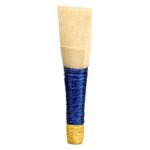
Foundation Reed BagpipeLessons.com

It’s clear, bright, stable, easy to play, efficient, and easy to tune. This is the best reed I’ve ever played in the Infinity Chanter.  Every Foundation Reed is stored in a humidity-controlled Tone Protector, so the moisture is stabilized in the cane. Every reed that you order is handpicked by me at the exact strength that you want and shipped to you in a sealed package.  Every Foundation Reed is personally guaranteed by me. You will be happy with your reed, or I will send you a new one until you are 100% satisfied.

Let me tell you what happens when you switch to the Infinity Chanter:  Your execution gets cleaner immediately—not after weeks of practice, immediately—because your fingers can finally do what they’ve been trying to do all along.  Cold weather stops being such a problem. When your fingers are stiff and cold, the smaller holes make it way easier to play.

Your confidence goes up, too. If you’re worried about chirping during a performance, that will be gone, because you can trust your chanter to sound great, and you won’t be fighting it to get the sound and execution that you want.

And here’s the thing that surprises a lot of people: you are not sacrificing anything. This is a world-class chanter with a world-class sound. Champions are winning gold medals and clasps playing the Infinity Chanter. Pipe bands are switching. The tone is amazing.  You get the comfort and the sound. That’s what makes this chanter revolutionary.

After playing the Infinity Chanter, I never want to go back. And I hear the same thing from pipers every single week.  If you’ve been fighting your chanter, if your execution isn’t as clean as you know it should be, the Infinity Chanter is part of the answer for a better, more consistent piping experience.  You still have to practice and focus on playing with good form, but you will feel and hear that practice payoff faster with a chanter that isn’t holding you back.

To learn more about the amazing Infinity Chanter and to get yours today, go to: BagpipeLessons.com/infinity.  I’ll put a link in the description below where you can learn all about it and get yours.  We have all three models in stock: the amazing Blackwood with the smoothed-out holes, the Poly Chanter for a great value—great for pipe bands—and the Poly Chanter in B-flat for playing with other instruments.

If you want to learn more about improving your bagpipe sound and playing, please hit that subscribe button and turn on notifications to get notified when I post new videos here on the channel. I’m working on a bunch of new videos that I think you will love.

For even more resources, visit:  BagpipeLessons.com/learn.  I’ve got hundreds of free videos, downloadable guides, articles, product reviews, and more. The link is also in the description below.

And if you’re looking for more personalized help from me to take your piping to the next level, check out my Inner Circle membership at:  BagpipeLessons.com/membership

The Inner Circle is my online piping school where I do weekly live Zoom classes. You also get access to my lesson library with hundreds of hours of videos, lessons, tunes, and more. And you get to be part of my private community of pipers working together to get better and find more enjoyment in piping.  Every class is recorded, so if you can’t attend them live, you can watch at your convenience and at your pace.

Thanks again for watching.