


And that’s exactly what every Tone Protector product does, using the incredible two-way humidity control technology. If the reed’s too dry, it adds moisture. If it’s too wet, the Tone Protector removes it. You don’t have to do anything. It adapts to the air around you, so your reed is always ready to play when you’re ready to play. Let’s take a look.
This is the Tone Protector Chanter Cap. Now, a regular old-fashioned chanter cap protects your reed from getting smashed, but it does nothing about the moisture content of your reed. The Tone Protector solves that. Inside there are two-way humidity control packets, and each Tone Protector comes with two of them.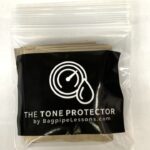
I use both of them, and I recommend two for just about everyone. Some pipers who really play a lot and are really wet blowers just use one, but I’d say start with two and see how it goes for you. The advantage of using two is you won’t have to switch them out as often. And you know it’s working when the digital hygrometer on the top reads 84%, or somewhere close to it. Sometimes it’s a little higher, sometimes a little lower, but anywhere close to 84 is great.
Also, each Tone Protector comes with a spare battery, but the first one should last for years. If the screen ever goes blank, it might be time for a new battery. And if the reading on the Tone Protector is consistently below eighty, that’s when it’s time to replace the packets. But for most people, two packets will last many, many months. I typically get six months or more out of a pair of packets.
You’ve also got the extra-large knurled thumb screw, which gives you a nice secure fit on your pipe chanter. So this is the routine. When you’re done playing, take your chanter out of the stock, cap it with the Tone Protector, tighten down the screw, and that’s it. When you’re ready to play again, take the Tone Protector off, plug your chanter back into your pipes, and you are good to go.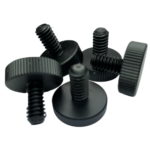
No more licking, no more pinching, no more messing around with your reed. Just keep an eye on the Tone Protector, and as long as it’s somewhere close to the 80s, probably really close to 84, you know your reed is going to be perfectly ready to go when you are.
The Tone Protector Chanter Cap comes in eight vibrant colors. The most popular colors are blue, black, red, and green. We also have purple, orange, yellow, and pink. We also have a band discount on Tone Protectors: buy 10 or more and we’ll give you 15% off. You’ll automatically get the discount when you order 10. And if you’re placing a big order for your pipe band, you can choose all one color or a mix of colors. Just let us know what you want and we’ll make it for you.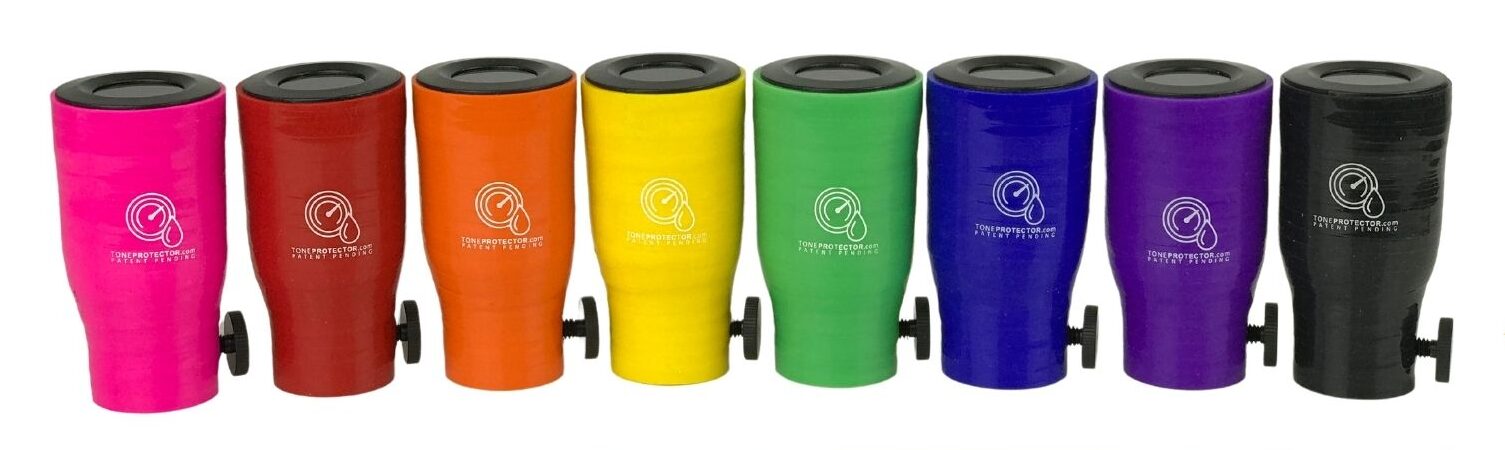
The Tone Protector Chanter Cap won Pipes|Drums runner-up Product of the Decade and is trusted by thousands of pipers around the world, from brand-new beginners to pipers competing and winning at the very top.
So the chanter cap takes care of the reed you’re playing, but what about your other reeds? What about that trusted old reed that’s just gotten a little too old? You don’t want to get rid of it because it could be a backup in an emergency. Or your new reeds, the ones you’ve bought and want to have ready for the day you need them. That’s where the Tone Protector Reed Case comes in.
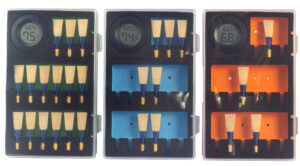 It holds up to 15 reeds and comes in three colors: blue, green, and orange. It holds each reed securely. It’s got the digital hygrometer, and the packets go in the back. It comes with two packets at the 75% humidity level, and it also comes with a spare battery.
Now, pipers have asked me, why is the reed case at a different humidity level? You could use the same level for both the chanter cap and the reed case, but this is what we’ve discovered: the Tone Protector Chanter Cap, which holds the reed you’re actually playing, works best at 84%, slightly higher. And for the Tone Protector Reed Case, we found that 75% is better for longer-term storage.
And here’s something I’ve discovered. A lot of what pipers struggle with when it comes to breaking in reeds — and by breaking in, we mean taking a brand-new reed and getting it stable, to the right strength, feeling good, and easy to tune — a lot of that break-in process isn’t about playing the reed at all. It’s about getting the right moisture content into the reed. So you take your brand-new reeds, put them in your Tone Protector Reed Case, leave them there for a couple of days, and they’re going to be ready to go when you need them.
 The Tone Protector Reed Case won Pipes|Drums Product of the Year. Roddy MacLeod is one of the greatest pipers of all time, and he’s known not only for his incredible playing but for his amazing, incredible bagpipe sound. And this is what Roddy told me, and I’m quoting him word for word: “I love using the Tone Protector. I find that my reeds last longer and that the tune-up time until the pipes are at their settled pitch is less. I currently have them on five chanters: band chanter, B-flat, and three solo chanters. I use the Tone Protector Reed Case for spare reeds, which keeps them stable.” So when Roddy MacLeod is using the Tone Protector Chanter Cap for all of his chanters and keeps his spare reeds in the Tone Protector Reed Case, that is everything you need to know.
Next up, I want to talk about the Tone Protector for drones. This is for pipers who want the same amazing Tone Protector humidity control for their drone reeds. Some people use them on synthetic reeds, but these are primarily for pipers who play cane drone reeds. And we’ve got some pipers who absolutely love them, including Stuart Little.
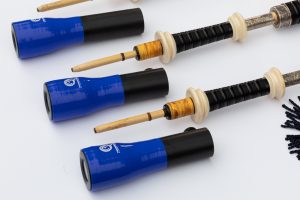 It’s the exact same Tone Protector technology, just in a longer shape to accommodate these longer bass and tenor drone reeds. You can get the Tone Protectors for drones individually — a single bass or single tenor — or as a set of three, or as a set of four, which is all three drones and the chanter. The single bass drone is actually quite popular, because a lot of pipers play a cane bass drone reed with two synthetic tenors. That’s a really popular combination for top solo players who love that extra richness and resonance you can get from a cane bass reed. So use the Tone Protector on the bass drone only.
And like I mentioned, these are used by some of the world’s very top pipers, especially pipers in the world’s top bands where they play cane drone reeds. Stuart Little, the pipe major of Inveraray & District, told me that with the Tone Protector for drones, his drones are booming.
And these are on his super-famous MacRae bagpipes, the original ones. They already have an amazing drone sound. Now Stuart trusts the Tone Protector to take that tone and steadiness to the next level, and he’s all over the world — Scotland, the US, Canada, Australia, Europe, who knows? The Tone Protector helps keep his drones stable no matter where he is.
If you want extra protection for your reed, let’s take a look at the Tone Protector ReedSafe, which is built around a split stock. Now, split stocks have actually been around for a long time. But instead of a regular one-piece pipe chanter stock, the stock is in two pieces. When you’re playing, it looks like a normal pipe chanter stock at the front of your bag. But instead of pulling out your chanter and exposing the reed, the stock actually splits into two pieces. This part stays attached to your bag, and this part covers your reed, so your reed is fully protected. A special Tone Protector cap goes right over the top.
Now, this is a special Tone Protector just for the ReedSafe. It’s bigger — a regular Tone Protector won’t work with the split stock. These are really popular with some pipers because you can take your chanter out and cap it without ever worrying about exposing or damaging your reed. If you’ve ever chipped a reed getting your chanter out of the stock, the ReedSafe is a fantastic option. Kids sometimes break their reeds because it’s hard for them to get the chanter in and out carefully. If you look at your pipe chanter reed and there’s a little bend on the corner, or a little piece is chipped off, or maybe there’s just some dark coloring on the edges of the reed from touching the inside of your chanter stock, a split stock might be a great idea for you. 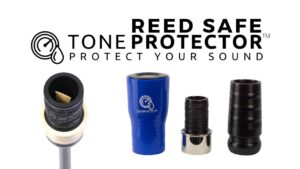
I was recently traveling and I took my bagpipes with me to some very rural, mountainous areas, and I knew I’d be taking my pipes out of the case and getting ready to play in some rough, unpredictable terrain. So I used the Tone Protector split stock, and I could very easily put my pipes together, take my chanter out, cap it, uncap it, and play with no worries because the reed is protected in the ReedSafe. So if you’ve been thinking about a split stock, you can get one now and it comes with the Tone Protector. It’s available in two colors, blue and black. And the ferrule is available in either imitation ivory or nickel to get a good match for your bagpipes.
Now let’s talk about some more supplies and replacements for your Tone Protectors. We’ve got the humidity packets — you’re going to need these. They come in 84%, which I recommend for the Chanter Cap, the Split Stock ReedSafe, and the Tone Protectors for drones, and then 75%, which is slightly lower, which we recommend for the Reed Case. The packets come in packs of 10, or for pipe bands, or if you just really want to stock up, you can get them in packs of 100.
We’ve also got spare batteries — they come in packs of two. And we’ve got replacement screws. We hear from pipers who drop their Tone Protector and the screw breaks. Also, if you’ve got one of the original first-generation screws, the new screws are bigger, wider, and have bigger ridges, which make for easier turning. So if you want to upgrade from the older screw to the newer, bigger, more ergonomic one, you can grab a replacement Tone Protector screw.
We also have extra digital hygrometers. That’s the digital readout that goes on your Tone Protector and shows you what’s happening inside, so you know that your reeds are always at the perfect humidity. Some people like to keep an extra one of these in their pipe case just to see what the humidity is doing in the air around you. And if your hygrometer ever gets broken, you can get a replacement.
Now, if you’re not getting a good reading on your Tone Protector, the first thing to check is the battery. Sometimes just taking the battery out and putting it back in gets everything working again. If that doesn’t do it, or the screen is blank, try a new battery. If a new battery still doesn’t fix it, it’s time to replace the hygrometer. I stand behind all of my products 100%. That’s my personal guarantee to you. So if it broke on its own and you haven’t had it that long, reach out to me and we’ll make it right.
One important thing to know: the hygrometer is electronics, and the way you can kill it is by getting water in it, so keep water away from your Tone Protectors. I’ve heard from some pipers who try to pour water into the Tone Protector. I do not recommend that. It gets the reed too wet, it can even cause mold to grow on your reeds, and if water gets in the electronics it’s going to break the hygrometer and you’ll have to get a new one.
And there’s another important reason you want to replace your packets when they get dried out. Besides holding the water that keeps your reed at the right humidity, the packets also have an anti-mold ingredient. It’s completely food safe — it’s the same stuff that’s in a lot of the prepared foods you eat every day, like bread and cookies and crackers from the store. But it does get depleted over time, so when your packets dry out, you want to get new packets to keep your reeds nice and fresh and ready to play.