

By Jori Chisholm • BagpipeLessons.com
How is practice different from simply playing your instrument? Practice is focused on making changes and producing results. Good practice leads to learning new skills, achieving mastery, and building consistency. Playing is what you do once the practice has done its job.
The short version
Practice with a specific objective, not a general intention. “Work on this tune” and “practice more” are not objectives. “Play the first two parts on the pipes at 60 bpm, three times in a row, with no crossing noises, missed doublings, chokes or false fingerings” is an objective, and it tells you exactly what to do today.
Work backwards from a big goal. Five years, then twelve months, then this month, then this week, then today. Every big accomplishment breaks down into smaller ones, and the smallest one is what you play in the next fifteen minutes.
Short and frequent beats long and occasional. Ten or fifteen minutes a day builds more than one marathon session a week — and get your pipes out, not just the practice chanter. Your goal is to be excellent on your pipes.
What Is Practice?
What are some of the specific things you might work on when you practice?
- Learning a new tune
- Memorizing a tune
- Troubleshooting the tricky bits
- Getting a tune up to speed
- Making the tune reliable
- Building stamina
- Improving your tone
- Getting better and faster at tuning
- Preparing for performance or competition
With so many different things to practice, how do you choose what to practice on a given day? The answer depends on what you are trying to achieve. What you practice today will determine where you will be in the months and years to come. The most effective practice sessions are focused on specific objectives with long and short term goals in mind.
Set Goals
Take some time to assess where you are today and where you want to go with your playing. Set aside 20-30 minutes of uninterrupted time to answer the following question: what do you want to accomplish with your playing in the next five years?
There is no right or wrong response. Every person will have a different answer. Examples might include winning a specific competition, playing with a band, performing at a particular venue, or learning a certain set of tunes. These are all possibilities for you. Don’t hold back. Dream big! Get inspired. Be as detailed and specific as possible.
Work backwards from your big goal
What do you need to accomplish in the next six to twelve months in order to be on track to achieve it? Be specific here as well. Every big accomplishment can be broken down into more manageable goals.
Again, work backwards to today. Based on your goals for the next several months to a year, what do you need to accomplish in the next month? Your one month goals should be more specific, referring to specific skill areas (such as blowing, rhythm or execution) and learning specific tunes. Then ask yourself, based on this month’s objectives, what you need to practice this week and today?
Design Clear Practice Objectives
At my next lesson, I should be able to play the first two parts of my competition 2/4 March on the pipes with the metronome set at 60 beats per minute, three times in a row, with no crossing noises, missed doublings or grace notes, chokes, or false fingerings.
This type of objective very clearly directs your practice. It requires you to work on several different areas of your playing. Specific objectives help you practice more effectively than general ideas like “work on this tune” or “practice more.”
Connect With a Good Teacher
In addition to regular goal-focused practicing, aim for frequent lessons from the best teacher you can find. And remember, a good teacher is more than just an expert player. A good teacher keeps you inspired, challenged, and focused on reaching your goals. Your teacher should be able to evaluate your strengths and weaknesses and help you create specific and clearly defined practice objectives.
Looking for a fun, supportive community with all of the resources, information, and support you need to reach your piping goals? Join the BagpipeLessons.com Inner Circle and get access to my exclusive lesson library with hundreds of lessons on every piping topic, plus join our weekly LIVE video group classes with World Champion guest instructors.
Practice Frequently
Multiple short sessions are always better than one marathon session. Try to practice for at least 10 or 15 minutes per day, rather than saving up your time for a big session. Keep track of the days you practiced, and try to reduce the number of days you skip entirely.
When and how much you should practice depends on what you are trying to accomplish. The more time you can practice the better, but goal-focused practicing is best. This is a time to focus on your goals, not simply a daily chore you complete while watching the clock.
Take Notes
Find a way to keep track of what you need to practice as well as what you’ve accomplished. Try keeping a practice journal, and write down what you’ve worked on, what still needs to be fixed, and what solutions you discovered. Or, try to keep a simple list of all the tasks you need to practice. Cross them off when you achieve them.
Stay Organized
Keep a running list of all of your tunes. Organize your solo tunes, band tunes, and other music in a binder or folder. Your goal is to spend less of your time looking for your music and notes and more time actually getting things accomplished.
Create Deadlines
Competitions and performances can be great ways of keeping you on schedule with your practice. You should know exactly how many days, band practices, or individual lessons there are until your next performance. An organized calendar with clear deadlines keeps you from falling behind and helps ensure that you are fully prepared on the big day.
If you don’t compete or perform, consider setting an arbitrary deadline. Pick a day that you will perform a specific tune for a friend or family member, or set a timeline to complete a particular task. Humans are naturally goal-seeking organisms. Set a goal with a specific deadline and make a step-by-step plan for success.
Record Yourself
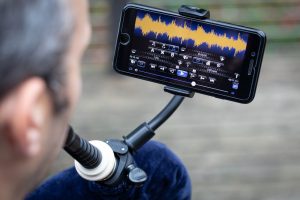
Document yourself playing today and again two weeks later. Listen to the two recordings and compare. How did you do? Give yourself credit for what you’ve achieved. Make adjustments to your practice routine to overcome any persistent challenges. For more ideas, ask your teacher, discuss with friends, or consult players who you admire.
Play Your Pipes
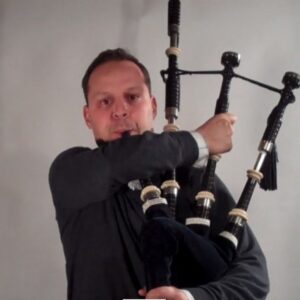
Many pipers spend too much time on the practice chanter. Get your pipes out and work on your timing, tempo, execution, and phrasing. Play your pipes long enough to get exhausted, then put them down and keep working on the practice chanter. Regular practice on your instrument is the only way to build up the strength, stamina, and coordination required to be able to play comfortably and well. Your goal is to be excellent on your pipes, not the practice chanter.
Be Smart With Your Gear
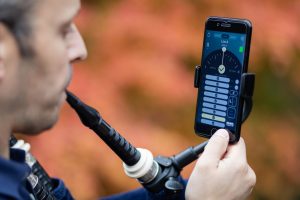
Don’t waste time with old, worn out equipment. You can get an instrument that sounds great, feels great to play, and stays in tune regardless of your budget. A new set of drone reeds will give you years of steady tone. A high-quality, hand-picked pipe chanter reed that’s the right strength for you will allow you to focus on playing, not struggling to keep it going. A new, modern hybrid pipe bag will stay airtight and make your pipes efficient and easy to play. The Tone Protector™ and Tone Protector™ Reed Case will store your reeds at a stable humidity level so your pipes will always be ready to play — spend more time playing and less time tuning and messing around with reeds.
Break It Down
Playing your instrument requires you to do many things well at the same time. To make improvements, it often helps to focus on just one thing at a time. Tunes can be long, complicated, and challenging. Simplify by playing the tune slower or by breaking it down into phrases, bars, or individual note combinations. Repeat these smaller sections until you have achieved the desired rhythm and execution, then gradually build up to longer sections. Keep good notes of all of the tricky bits in your tunes and practice those sections first, then try the tune as a whole.
Focus
Focus on one or two tunes in a practice session, and really get into the details of those tunes. Don’t just play several tunes once through from start to finish.
Use a Metronome
Often a band or solo performance requires a tune to be played at a specific tempo. Use your metronome to establish a baseline tempo where you can play with consistency and control. Then, gradually increase your tempo, one or two beats per minute per day until you reach your goal performance tempo. As you speed up, beware of tension in your hands. Your goal is to keep the same level of control and consistency at the new faster tempo.
The best metronome is The Piper’s Metronome™ — it’s built specifically for the way pipers learn and play their tunes. It’s packed with features that no other metronome has.
Make a Secret Hit List
We all have specific skill areas that need more work than others. Make a list of your challenges and systematically practice to overcome them. Your list may include skills like blowing, tuning, or marching and may also include specific fingering techniques like crossing noises, tachums, or crunluaths. Successful players know their weaknesses and tackle them head on. No one ever improves at something by avoiding it.
Play Your Band Tunes at Home
The essence of good pipe band playing is unison of fingering and tone. However, it can be difficult to hear the details of your own playing in the pipe band circle. Play your band tunes at home to verify that you are on target with your rhythms, execution, and tone. Regardless of the level of your pipe band, you’ll always be able to hear your own playing better when you’re playing all on your own.
Review and Re-evaluate
If you are putting in the time and not getting the results you want, make changes to your practice routine. As you progress, your skills will improve, your goals will change, and you will need to adjust your practice strategies.
In Summary
- Focus your practice sessions on specific goals and make a plan for your success.
- Get lessons from the best instructor you can find. Get honest feedback with clearly defined expectations.
- Keep yourself organized with good notes and a calendar to keep track of deadlines.
- Practice frequently, play your pipes regularly, and record yourself often to self-evaluate.
- Break your tunes down to identify and focus on the hardest parts.
- Focus your practice sessions on a short list of tunes or skill areas.
- Use your metronome to gradually build up speed while maintaining control.
- Make a list of your weaknesses and turn them into strengths.
- Play your band tunes at home.
- Continually review and adjust your practice methods to get the results you want.
Practice smart, often, and hard, and anything is possible.
Related Guides
- Your Practice Checklist — 87 questions that show you exactly where the gaps are.
- Learn Tunes Fast by Avoiding These Common Mistakes — the errors that slow tune learning down.
- The 80/20 Rule for Steady Bagpipe Blowing — the single highest-value thing to practise on the pipes.
- 10 Ways to Get the Most Out of Your Online Bagpipe Lessons — how to arrive at a lesson ready to work.
Frequently Asked Questions
How much should I practise the bagpipes each day?
At least 10 to 15 minutes every day beats one long weekly session. Frequency builds the coordination and stamina that duration alone does not, and it keeps the number of skipped days low, which is the number that actually predicts progress.
What is the difference between practising and playing?
Practice is aimed at changing something — a rhythm, a movement, a tempo, a tone. Playing is running tunes you can already play. Both have a place, but only one of them moves you forward.
What makes a good practice objective?
Specificity you can verify. Name the tune, the parts, the instrument, the tempo, the number of clean repetitions, and the faults that disqualify an attempt. If you can’t tell at the end of the session whether you hit it, it wasn’t an objective.
Should I practise on the pipes or the practice chanter?
Both, but most pipers under-use the pipes. Play the pipes until you’re tired, then move to the chanter for technique. You are trying to be excellent on the pipes, and only the pipes build the strength and stamina that requires.
How do I stop making the same mistakes?
Write them down. Keep a running list of your weak areas and tricky bars, practise those first in each session, and cross them off as they become reliable. Players improve at what they face and stay weak at what they avoid.
How do I use a metronome to get a tune up to speed?
Find the fastest tempo where you have full control, then add one or two beats per minute per day. If tension creeps into your hands, you have gone up too fast — drop back until control returns.
About Jori Chisholm
Jori Chisholm is a world-renowned American professional bagpipe player and teacher. He played with the six-time Grade One World Champion Simon Fraser University Pipe Band for 19 years and was a featured solo performer for the band on multiple occasions. He is a successful solo competitor, winning the United States Gold Medal four times and winning top prizes at many top competitions including the Northern Meeting at Inverness, the Argyllshire Gathering in Oban, the Royal Braemar Gathering, and the Cowal Highland Gathering.
Jori started BagpipeLessons.com in 1999, in hopes of bringing pipers of all levels and experience valuable, trusted information, tools, support, and inspiration. In 2003, Jori was the first piper to teach bagpipes online. He has been featured in a New York Times front page story about the growth of online music lessons. Jori also founded the world’s first online-only piping and drumming competition, the World Piping and Drumming Championships, which has become a highly popular and celebrated event.
Jori has invented several popular, award-winning, and patented products for pipers including the Tone Protector™ chanter cap with two-way humidity control, the Tone Protector™ Reed Case, InTune Mic™, the Bagpipe Gauge, the Piper’s Ultimate Reed Poker, the Piper’s Advantage™ Bagpipe Phone Mount, and the Piper’s Metronome™. Jori lives in Seattle, Washington with his wife and two sons and enjoys traveling, exploring the great outdoors, and of course, music of all kinds.
Questions? Visit BagpipeLessons.com/membership-faqs for more information!