

Where Do You Practice? Real Pipers' Practice Spots

The Bagpipe Has Only One Volume, and That Volume Is Eleven

by Jori Chisholm, Founder of BagpipeLessons.com
Last Updated: September 19, 2026

The New York Times ran an article this summer about pipers in New York City hunting for somewhere to practice — cemeteries, junkyards, a rock in Central Park, out at Coney Island facing the waves. I sent it to my email list and asked one question: where do you practice?

The replies came in from pipers around the world, from Scotland to Tasmania, and they were better than anything in the article. This video is made from those stories — the touching ones, the funny ones, the strange ones — plus the six months I spent playing my pipes almost every day in a downtown Copenhagen apartment, and what that taught me about being heard.

Key Points in this Video:

  • The loudness is a feature. The great Highland bagpipe has only one volume — and that turns out to be one of the best things about our instrument.
  • Your stories. Bagpipes heard through a manhole cover, a naval officer whose parking-garage practice was missed by the whole base, a preschool class in an Australian park, Amazing Grace played out of sight in a cemetery, and a silent clown.
  • Six months in Copenhagen. I played almost every day in a third-floor apartment downtown — and the knock on the door never came.
  • Be bold and brave. The response to bagpipes is overwhelmingly positive. Every time you play where someone can hear you, you might be the piper in somebody else’s story.

Chapters:
0:00 Where do you practice?
0:43 The last time bagpipes made The New York Times
0:58 The article: hunting for a spot in New York City
1:35 I sent it to my list and asked one question
1:53 Storage units, airplane hangars, and the side of the road
2:37 Bagpipes coming up out of a manhole cover
2:57 The piper on the aircraft carrier
3:24 The park in Australia and the twenty dollars
3:47 Amazing Grace in the cemetery
4:11 The clown at the end of the room
4:47 A gloriously outdoor instrument
5:35 One volume, and that volume is eleven
5:57 Six months in a Copenhagen apartment
6:57 Being bold and brave about being heard
7:15 The Keith Highlanders and “I love bagpipes”
7:59 Go play outside and tell me about it

Follow BagpipeLessons.com on your Favorite Platforms:

Video Transcript: The New York Times wrote about one of the hardest things about being a piper, and it’s not the instrument or the music. I shared the article and asked one question: Where do you practice? Stories came in from pipers around the world, from Scotland to Tasmania, and here’s what got me. The loudness that we pipers often treat as a problem is actually one of the best things about our instrument.

In this video, I’ll share with you some of these great stories, the touching ones, the funny ones, the strange ones, and I’ll tell you about the six months that I spent living in an apartment in Denmark and what it taught me. Stay to the end, and you’ll never feel shy about playing again. You’ll want people to hear you. Here we go.

The last time the bagpipes were featured this prominently in The New York Times, it was a photo of me on the front page teaching a lesson on Skype. That was back in January of 2012, in a story about the growth of online music lessons.

This summer, The Times ran another article about pipers, and this one made me laugh because it’s about a challenge every piper knows: finding somewhere you can actually practice. The article follows pipers around New York City hunting for a spot where no one will chase them off.

Pipers practice in cemeteries, in junkyards, along highways and waterfronts, on a rock in Central Park, in the corner of a hardware store parking lot next to a scrap metal yard, under a dingy overpass, out at Coney Island facing the waves.

It’s a New York story, but the problem is universal, and this is one of the most common things I hear from pipers everywhere. A few weeks ago, I sent the article out to everybody on my list, and I asked a simple question: Where do you practice? What have you had to do to find a spot? I asked people for the strangest place you’ve ever played, the most creative, the most beautiful, and I asked for photos. What came back was better than anything in that article.

I’ve done my share of hunting for practice places myself. When I’m traveling around Scotland, staying in bed and breakfasts and small hotels, I’m pulling the car over to the side of the road to find a quiet place to practice. One of my students rented the smallest storage unit he could find. He kept nothing in it but a case of bottled water. This was just so he had a place to play. I knew a piper who worked in an airplane factory. He would go down to the deepest part of the hangar, down to the very lowest point where there’s a giant drain. That’s where he practiced. And then there was a time when I lived in downtown Copenhagen in an apartment, and what happened on the very first day I got the pipes out.

Replies came in by email, and on Facebook, and on Instagram, and here are some of my favorites. Don writes he was learning in the 1980s. He lived in a loft building, and he practiced down in the basement. He was certain he was well out of range of anybody. Then one night, somebody tapped him on the shoulder, and he nearly jumped out of his skin. The man had been walking down the street, and he heard bagpipes coming out of a manhole cover, and he felt he had to find the source.

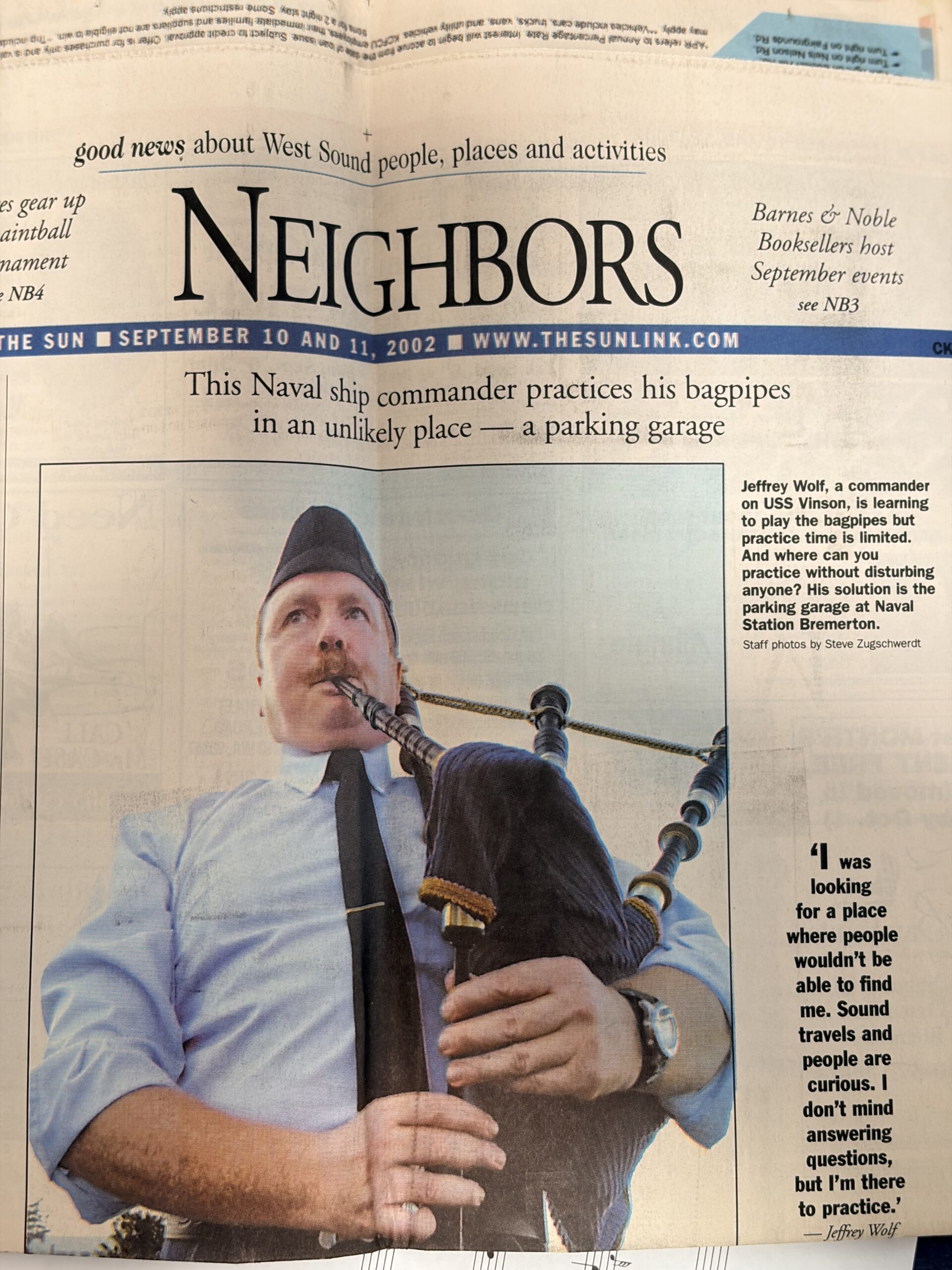
Jeffrey was a naval officer stationed aboard the USS Carl Vinson. When the weather cooperated, he practiced on the flight deck in port, the rest of the time in the base parking garage. Always the top covered level, because curious people kept coming to look for him. Then he went out to sea for a couple weeks, and when he got back, there were signs posted in the garage asking what had become of him. The sound had been carrying across the whole base. People missed it. The local paper eventually ran a story about him.
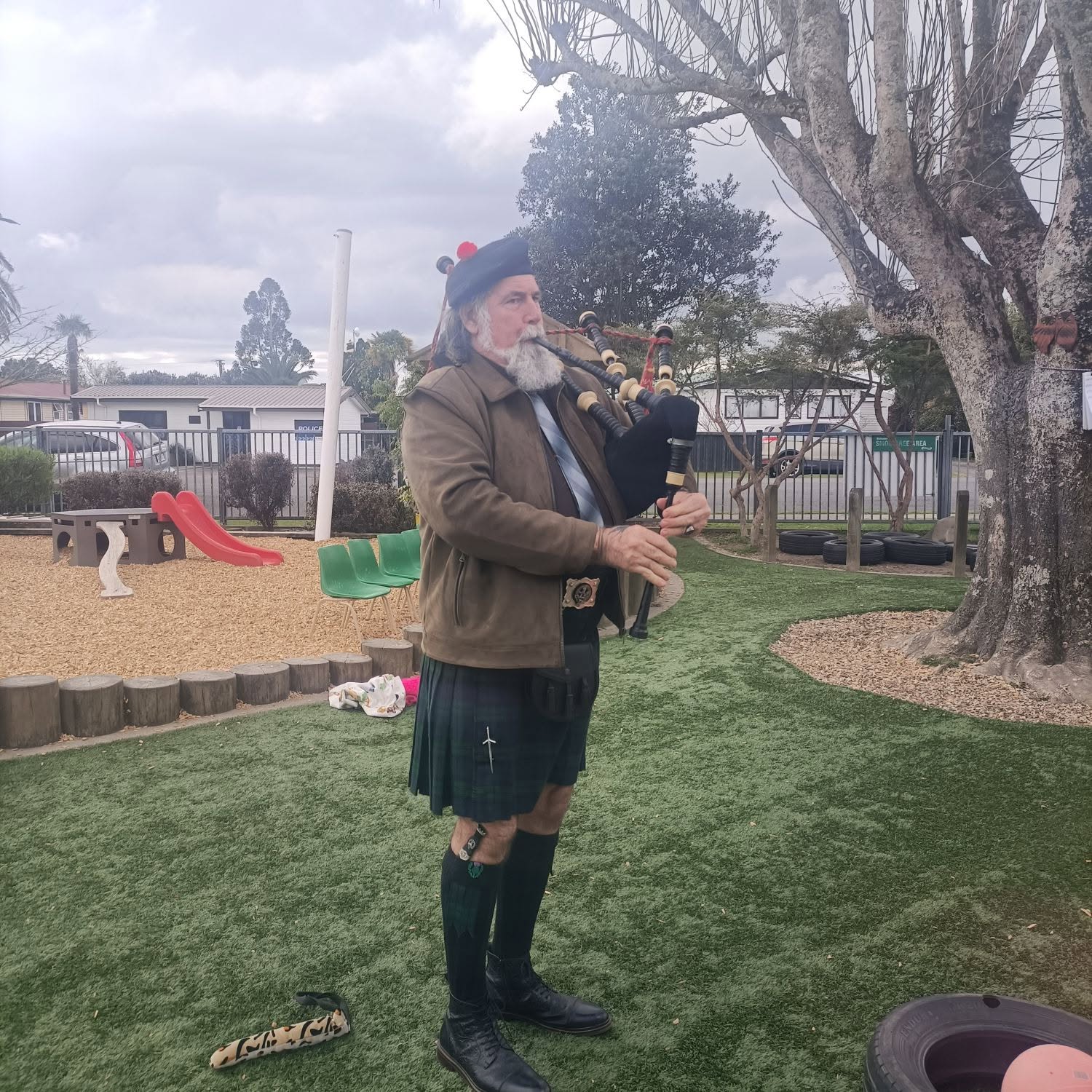
Gordon is a piper in Australia. He goes to his local park in the afternoons. One day, a preschool class was there, and the teacher asked him whether he would play for the children. They all sat down in straight lines to listen. Another Saturday, a gentleman dropped twenty dollars into his pipe case, assuming he was busking. Gordon tried to give it back. The man insisted. He said Gordon had stirred his soul, and it was the least he could do.

Steven was staying at a hotel next to a cemetery before his fiftieth high school reunion, where he’d been asked to play. He was driving back one evening around sunset, and he saw a man sitting by a gravestone with his head in his hands, crying. Steven parked the car. He took out his pipes, walked along the trees out of sight, and he played Amazing Grace. He never made his presence known, but he certainly knew he could be heard.

And then there’s David, who told us he practices in his spare room at his church, where he’s usually alone. One Saturday morning in October, he turned around mid-tune, and standing there was a clown at the far end of the room, just watching him. He said, “Hello.” The clown did not move. He asked it a few questions. The clown did not answer. He was starting to think about how to get out of this situation, and then he noticed the clown was very short. A moment later, a mother and two more children walked into the room wearing costumes. They were there to decorate for a Halloween party. The kid in the clown suit had been told, “Never talk to strangers.”
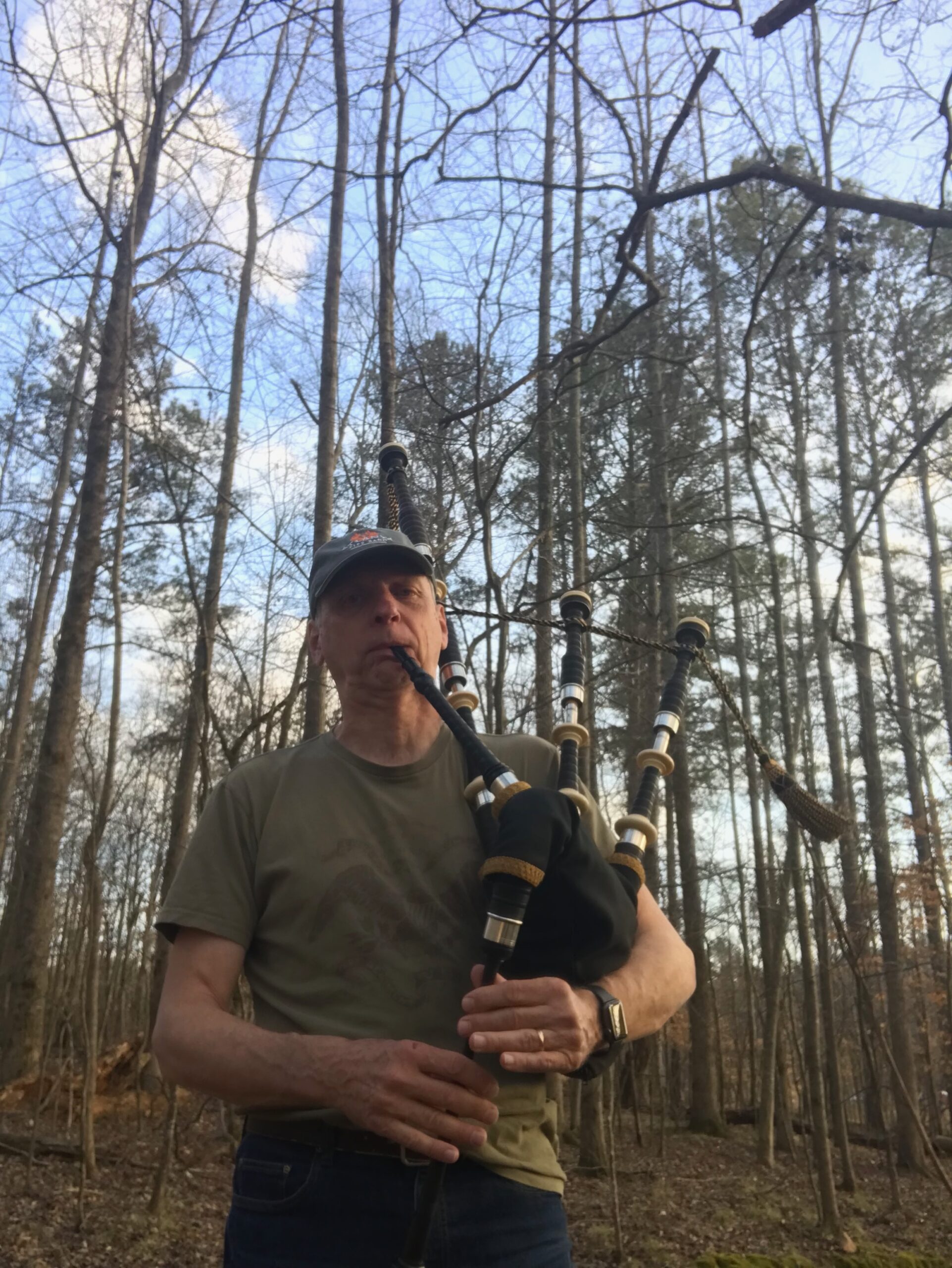
Here’s what struck me about reading all these great stories. The bagpipes are a gloriously outdoor instrument. No electricity, no amplifier, no cables, no music stand. It goes wherever you go. You carry it on your back and you carry it wherever you’re going. Wherever you are becomes your stage, and playing outside is one of the great joys of piping.
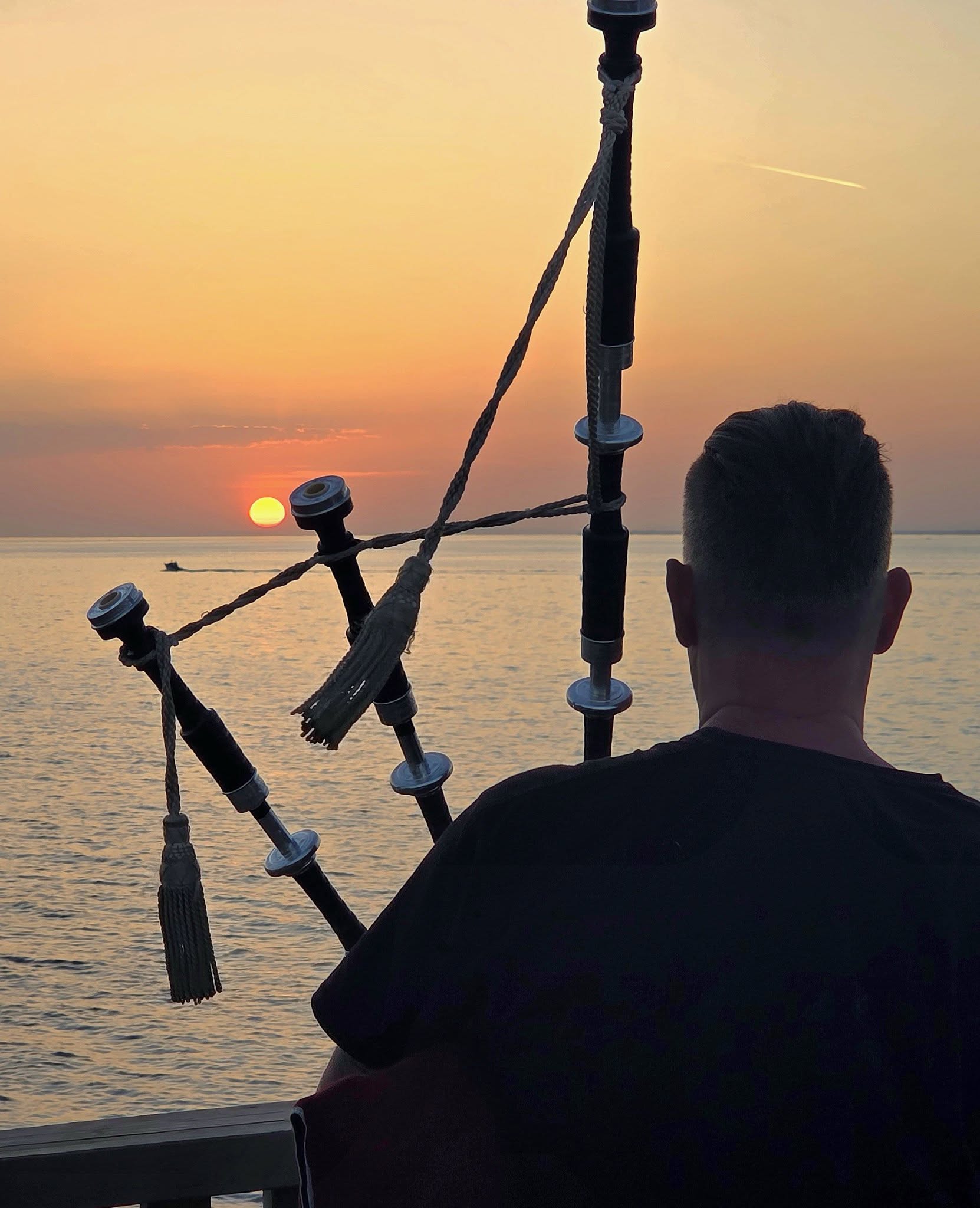
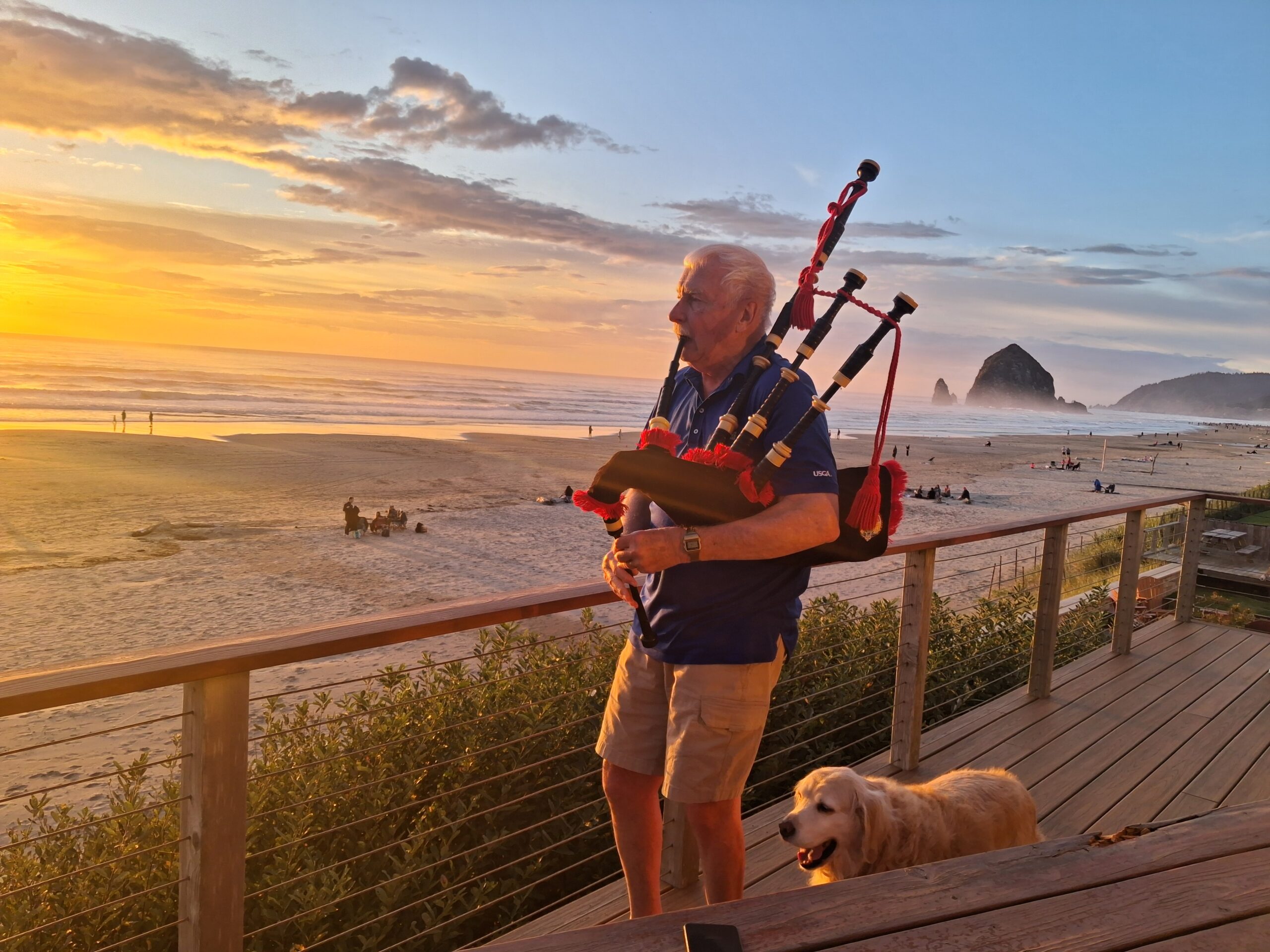
Pipers wrote to me from beaches with their feet in the ocean in Australia and in Hawaii, from the top of a mountain, on the water, and on boats, in the desert, in the snow at altitude, in castles, and at sunset. That came up again and again. Others wrote from a tiny apartment, one from inside a closet. All these places count, but there’s a reason so many of these stories happen outdoors. That’s where the bagpipe was built to live.
Of course, there’s a reason that so many of us are out there hunting for good places to practice, and this article names it perfectly. One of the pipers puts it this way: “The great Highland bagpipe has only one volume, and that volume is 11.” So that’s the challenge. It’s real, and it’s really hard if you live in a dense city. And even if you can play at home, you have neighbors or family or maybe somebody trying to work in the next room, which brings me to my time living in Denmark. This is a story I wanted to share with you.


About 15 years ago, before my kids were born, I lived abroad for six months. My wife was there for her job, and we had an apartment in downtown Copenhagen in Denmark. My online teaching business was already going strong, so I took all of my in-person lessons online and taught from there. It was on the third floor. It was a beautiful building in a beautiful part of town, pretty near the water, and I decided if I was ever gonna play my pipes there, I was gonna play my pipes on the first day.

So, the first morning after we arrived, my wife went to work. I got the pipes out and played. The whole time I was playing, I kept waiting for a knock on the door, somebody coming to tell me to be quiet, that I couldn’t play there. The knock never came. I would peek through the blinds afterwards to see was there anybody standing down there on the street, looking up at the window. Nothing. Nobody. We lived in that apartment for six months. It was a wonderful trip, and I played almost every single day, and it was completely fine.

I think a lot of pipers feel shy or a little bit scared about being heard. I understand it. The instrument is loud, and maybe you had a bad experience in your past that sticks with you. But part of being a musician is about being bold and brave. In my experience, the response to bagpipes is overwhelmingly positive.

Just a few weeks ago, I was teaching the Keith Highlanders Pipe Band here in Seattle. We were outside in a school parking lot on a warm summer evening, and pretty soon we started to draw a crowd. Cars slowed down and stopped with their windows rolled down, dog walkers, families, kids riding their bikes. And then a car pulled up, stopped, and a gentleman got out. He walked right up to the band and waited till we finished the set, and then he threw his hands out wide and said, “I love bagpipes.”

Learn From the Best

I'm Jori Chisholm. I created BagpipeLessons.com to help you fulfill your dream of becoming a piper. I hope to see you soon at weekly online sessions of my Inner Circle.

So that’s what this video is all about. Every time you play where someone can hear you, there’s a chance that you are the piper in somebody else’s story. I’m a piper today for that same reason. Somewhere many years ago, when I was a little boy, I heard bagpipes and thought, “That’s amazing. I wanna do that.”

So go play outside. Find your spot, the park, the parking lot, the beach, a mountaintop, the top of a garage. Take your pipes and go. Get out there and play, and tell me about it. Where’s the best place you’ve ever played? What is the weirdest? What was a great place that was unexpected that other people might wanna hear about?

Please post it in the comments. I would love to hear from you, and everybody else would, too. Please subscribe to my YouTube channel and turn on notifications. I’m making more and more videos, and you don’t wanna miss the next one.

And if you’re interested in taking your piping to the next level, check out my BagpipeLessons.com Inner Circle. It’s my community of pipers from around the world, and I do a live class on Zoom for my members almost every week. And I just released my huge new lesson library, where you can ask just about any bagpipe question and have it answered instantly. Best of all, you’re surrounded by pipers who wanna see you do well.

Whatever your level, you’re welcome. It’s a place to keep learning, find inspiration, make progress, and find ways to enjoy your piping more than ever. So if that sounds like your kind of thing, check out my Inner Circle. The link is in the description below.

Thank you to every piper who responded and sent me their great stories and their photos. I did not expect to get such a response, but it really means a lot to me. Thank you very much. We’ll see you next time. Happy piping.

What being a member gets you:

  • A live class every week on the topics that matter most to you.
  • The new lesson library — 790+ lessons, searchable to the second, plus every class replay, chaptered and indexed within days.
  • Answers from me, and one-on-one support with your piping goals.
  • A worldwide community of supportive pipers.

Join this month and get locked in at current prices.

On October 1, 2026 both Inner Circle prices go up. Today they are $35 a month or $348 a year. From October 1, new members pay $45 a month or $399 a year. Join by September 30 and you keep today’s price for as long as your membership stays active. Current members keep theirs the same way.

And if you join for the year, we’ll start with a one-on-one personal goal-setting session with me — we’ll hop on Zoom (or a phone call, if you prefer) — and talk about where your piping is right now, where you want it to go, and how to build a plan that gets you there.

Join the Inner Circle