


▶ Video lessonTechnique
My Most Controversial Bagpipe Tip Ever? Pipers Are Arguing About THIS Thumb Position Tip.
The best spot for the thumb of your bottom hand is low, on the back of the chanter between the middle and ring fingers. It can feel unnatural or tight at first, but it keeps your hands relaxed and helps your small bottom fingers control the big holes. Almost all top pipers keep their thumbs low.
The Main Ideas
A short video I posted about thumb position became the most viewed, most liked and most commented-on video in the history of my channel. People got heated about it, so here I go into more detail.
I say the best spot for the thumb of your bottom hand is low, on the back of the chanter between the middle and ring fingers. It can feel unnatural, tight or even a little painful at first. But the bottom fingers have the biggest holes and the smallest fingers, and a low thumb helps them stay relaxed and in control.
I explain why, give you a quick test with your own chanter, share what I saw watching Alasdair Gillies play, and give you a simple plan for moving your thumb down.
At a glance
| Where the thumb goes | On the back of the chanter, between the middle and ring fingers |
|---|---|
| Too high | Even straight across from the middle finger is too high |
| Why it matters | The bottom notes have the biggest holes, the biggest spacing and the smallest fingers |
| Bottom-hand embellishments | D throw, birl, grip and taorluath |
| Two pillars of good form | Hands as relaxed as possible, and kept close to the chanter |
| What to expect | It may feel weird, tight or even painful, and get worse before it gets better |
| How long to try it | A week, or a couple of weeks, then tell me how it went |
Video highlights
“Definitely, you don’t want to be up high. Even straight across from the middle finger is too high.”
“When we say something feels “natural,” often that just means that’s what you’re used to.”
“That power was coming from precision and control and clarity, but with a very relaxed hand with that thumb in position.”
“But don’t give up. This is part of the process.”

Free guideTen Ways to Get the Most Out of Your Online Bagpipe LessonsTen tips to help you prepare, focus and get the most from every lesson, so you can fix habits like thumb position faster.
Get the free guideThe gear in this video
Your questions, answered
Tap a time to watch that part of the video.
What is the thumb position controversy on the bagpipe chanter?
It is all about where the thumb of your bottom hand sits on the pipe chanter or practice chanter. Some people think there is one perfect spot for everybody, others think there may be a different perfect spot, and some think it does not matter.
How should a beginner place their hands on the practice chanter?
On the top hand, put your ring finger in the middle of the first pad, on the third hole down from the top, then your thumb on the back, then drop the index and middle fingers. On the bottom hand, the pinky goes on the first pad and the index finger on the second pad, then drop the other two. The thumb is the only finger without a hole, so we get to decide where it goes.
Why are pipers arguing about thumb position?
Some people say putting the thumb low, between the middle and ring fingers, is painful. Others say it does not feel natural, or that whatever feels natural the first time you put your hands on the chanter is the right spot for you.
Where is the best place for my thumb on the bottom hand?
Right between the middle and ring fingers, straight across from there. That is lower than a lot of people have it. You definitely do not want it up high, and even straight across from the middle finger is too high.
Is it worth using a thumb position that does not feel natural?
I think it comes down to short-term versus long-term. When we say something feels natural, often that just means it is what you are used to. The best way to do something after a lot of practice is often not what feels right the first time, and it can take physically changing your body: strength, flexibility and range of motion.
Why does thumb position matter for the bottom-hand notes?
The low notes have the biggest holes, the biggest spacing and the smallest fingers. The bottom-hand embellishments are the D throw, birl, grip and taorluath, and they focus on low G and your pinky, so I want the thumb in the position that best helps those little fingers.
How does thumb position affect tension and control?
A low thumb helps keep the hands relaxed, and relaxed hands kept close to the chanter are the two pillars of good form. When my thumb is high, I have to pinch harder with my index finger and it causes pain in my thumb. When it is low, it is much easier and more relaxed, and the tension spreads across all four fingers.
What did Alasdair Gillies do with his thumb?
I once saw him from the side during a recital at the National Piping Centre in Glasgow. His thumb sat between the middle and ring fingers, very loose and relaxed. His sound was powerful, but that power came from precision, control and clarity, not tension.
Do top pipers keep their thumbs low?
Almost all of them do. It is not a rule, and they are not copying each other. It is the best way to increase finger dexterity, decrease tension, and increase clarity, consistency and speed.
How do I move my thumb down without hurting myself?
Just try moving it down, all the way between the middle and ring fingers, or a little bit if that is too hard, painful or tight. Give your body time to adjust. It will feel weird and may get worse before it gets better, but stick with it. Try it for a week or a couple of weeks.
Is there a course on bagpipe fingering technique?
Yes. My Bagpipe Essentials Masterclass is an online course with 31 detailed video lessons on hand position, the nine notes of the scale, grace notes, strikes, doublings, taorluaths and more.
Each week, the Inner Circle's lively sessions are designed to benefit pipers of all skill levels, all around the world.
LEARN FASTER. FIND GREATER ENJOYMENT FROM YOUR PIPING. JOIN ME.
Join the Inner CircleFull video transcript
0:00 Intro to Thumb Placement Debate
Hey everybody. So recently I’ve started posting short videos, which are clips from my longer-form YouTube videos. These are posted as YouTube Shorts, and they’re also being posted on my BagpipeLessons.com Facebook and Instagram pages.
Today I want to talk about one of these videos that’s becoming the most viewed, most commented on, and most liked video in the history of my channel and on my social media accounts. I thought I’d go into a little bit more detail and explanation on this topic that’s bringing up so much heated debate and conversation.
0:31 What is Causing All This Controversy?
So, what do you think it’s about? Is it bagpipe reeds and what are the best reeds out there? Is it some controversial idea about musical expression in our tunes? Is it about types of bagpipes and chanters? Is it about who’s the greatest bagpiper or pipe band of all time? Any other guesses?
It’s actually about the thumb.
This video is all about the position of your thumb on your bottom hand — on the pipe chanter or the practice chanter. So that’s what I’m going to talk about today: hand position in general, and in particular, the perfect, optimal position for your thumb on the bottom hand.
1:06 Why Your Thumb Placement Matters
So before we get into this, I want you to grab your practice chanter right now. Pause this video if you have to go get it. I want you to put your hands on your practice chanter in low G position — so all the fingers on the chanter — and I want you to look at the position of your bottom hand. Where is it on the chanter?
1:48 Poll: Where is Your Thumb Now?
Here’s what I want you to take a look at — and actually, I want you to put it in the comments below on this video so we can get a poll of where the thumbs are. Is it up here directly across from your pointer finger? Is it just between the pointer and middle finger? Is your thumb directly across from the middle finger? Is your thumb below the middle finger, just across from the space between middle and ring finger? Is it across from the ring finger, or lower?
So let’s end it there. These are your choices. I guess it could even be above — is there anybody whose thumb is higher than their index finger? Even with the finger between the index and middle, across from the middle, between middle and the ring, or even with the ring finger or lower?
Put your answer in the comments below. This is what my short video is all about that’s generating all this interest and conversation. So let’s talk about it.
This is the way I would teach you if you were a beginner coming to me. We would start with the top hand. I’d say, put your top hand on the practice chanter. You’re going to put your ring finger on the first pad — so your finger has the first pad, and then there are little creases there — so it’s just right in the middle of the first pad, on the third hole down from the top. That’s where your ring finger goes.
2:56 Optimal Hand Position for Beginners
Now, with your finger sort of straight, put your thumb on the back of the chanter. With your index and middle fingers straight, just drop them down. That’s the optimal position for your top hand. Some people end up being on the first pad, some on the second pad and a little bit angled. It all has to do with the length of your thumb. Everybody’s thumb is a little bit different.
So that’s the top hand: ring finger first, thumb, then drop the other two down.
Now on the bottom hand, here’s what we’re going to do: pinky first on the first pad, index finger on the second pad — right past the crease there. Then drop the other two down.
Now, your thumb needs to go somewhere. Your thumb is the only finger that goes on the chanter that does not have a hole — so we get to decide where it goes.
Some people think there’s one perfect, correct spot for everybody. Other people think there may be a different perfect spot, or that it really doesn’t matter.
Before I give you my answer, let’s watch the video that’s generating all this controversy. So here goes:
4:23 Why the Thumb Must Be Low
All right, there you go.
At recent count, we’re almost to 20,000 views and 200 likes, and over 30 comments. I think some people are even posting and deleting their comments because they didn’t like the feedback they were getting from other people. So, pretty amazing that this got so much interest and heated debate.
5:27 Viewer Reactions & Heated Debate
I’ll put the link to this Facebook video in the description — you can check it out and actually post a comment on there.
So, what is all the discussion and debate about? Well, a lot of it has to do with people saying that putting it low — right there between the middle and ring finger — is painful. Others argue that it doesn’t feel natural. Some say you should just put your hands on the chanter, and whatever feels natural the first time you do it, that’s the right spot for you.
5:59 Is Thumb Placement "Natural"?
I’m going to say the right spot is right there between the middle and ring finger — and that’s lower than a lot of people. Definitely, you don’t want to be up high. Even straight across from the middle finger is too high. You want to get it right down there, between the middle and the ring finger. That’s right where you want it to be — straight across from there.
If that feels unnatural to you, try it right now. If you’re a little bit higher, try scooting it down and see how that feels. You’ll probably feel a little tightness in this joint. You might feel a little bit of pain and tightness in this muscle here.
So why would you want to do that if it feels unnatural or painful?
Well, I think the answer is we’re really talking about the difference between short-term versus long-term. We’re talking about the difference between something that feels right the first time you do it, versus something that works best long-term.
When we say something feels “natural,” often that just means that’s what you’re used to. But that can be different from what’s the best way to do it with practice.
Something that’s innate is something you can do naturally without any practice. But that’s different from something you can do well after a lot of practice. Often the best way to do something is not the way that feels natural at first. It takes time to learn and develop — not just skill, but also physically changing your body: strength, flexibility, range of motion. That’s what you need to get that thumb down in that low position.
7:25 Short-term vs Long-term Benefits
People have described the game of golf as a game of opposites, where often the best way to do something is counterintuitive. What feels right to a beginner is not the way to get good at something long-term.
So let’s say that again: what feels right to you as a beginner is often not the way to get good at it long-term. Or another way to think about it: the right way, or best way to get really good at something, often feels counterintuitive, awkward, wrong, or even painful when you first start out.
7:58 Why Good Technique Feels Unnatural Initially
Let’s talk about why this low thumb position is so important. It’s because of the bottom-hand notes. On the bagpipe chanter — practice chanter or pipe — we have nine notes, from high A all the way down to low G. On the pipe chanter, the low notes have the biggest holes, with the biggest spacing, and with the smallest fingers.
Big holes. Spacing. Small fingers.
So we want to do everything we can to get our hands in the right position to give an advantage to those bottom fingers. I mean, check those out — really big holes down there on the bottom, for my little pinky. Even if you have bigger hands, it’s still your smallest fingers on the bottom with the biggest holes.
8:35 Importance of Thumb Placement for Bottom Notes
This is an Infinity Pipe Chanter. I love this chanter because it’s got smaller holes than a lot of other chanters. But even still, they’re way bigger than your practice chanter holes.
We’ve got our nine notes, 13 primary embellishments. We have a doubling for every note — low G doubling all the way to high A doubling. And we have four bottom-hand embellishments. What are they? D throw, birl, grip, and taorluath. These are embellishments that really focus on low G — and that involves your pinky, the big hole on the bottom of the chanter.
You want to get that thumb in the position to do everything you can to help develop control and dexterity of those little fingers down there.
The position of the thumb is also really important for keeping your hands relaxed. The two most important pillars of good bagpipe form are:
9:39 How Thumb Position Affects Tension & Control
- Keeping the hands as relaxed as possible
- Keeping them close to the chanter
Tension makes things worse. Raising your fingers way off the chanter makes things worse.
I want you to grab your practice chanter — or if you have a pipe chanter like this, you can try it as well. Go into low G position. Now hold your practice chanter just with your bottom hand, and try it in what I would call the correct position: thumb nice and low, between the middle and ring finger.
When you do that, raise your pointer finger as if you’re doing a D gracenote. Then middle finger, ring, and pinky. It’s a little bit wobbly here because you’re trying to control this chanter with just your bottom hand.
Now, slide your thumb up. Try it. What I feel is I have to pinch a lot harder with my index finger because all of the tension from the thumb is going into that one finger. And when I lift, it really moves — middle finger, ring finger, and then pinky.
Anytime the thumb is way up here, this actually causes me physical pain right here in the thumb. I have to push so hard to keep the chanter from flying around. My thumb is high.
When the thumb is low — much easier, more relaxed.
You can try the same thing with your pipe chanter. When I slide it up here, the whole thing wants to move. What that thumb does, when you have it nice and low, is it gives you a balance. When you’re playing, you’re not just moving your fingers — you’re actually using your thumb on the back for a very gentle pinching motion. And when your thumb’s in that position — between the middle and ring finger, perfectly in the center of your four fingers — it’s the most relaxed it can be. And these fingers can be the most relaxed, because they’re spreading out that tension across all four fingers.
11:29 Real-Life Example: Alasdair Gillies
About 25 years ago, I was in Scotland for the World Pipe Band Championships, staying in Glasgow, playing with the Simon Fraser University Pipe Band. I think this was the very late ‘90s or early 2000s.
Leading up to the Worlds, which were on the weekend, there were all kinds of cool piping events — recitals and other things — happening all week. I was with some friends from the band, and we were having lunch and heading to the Piping Centre to watch a recital by the great Alasdair Gillies, who was one of my teachers and one of the all-time greatest pipers.
It was a very popular recital, and we got the very last seats in the little recital hall there at the National Piping Centre. We were in the front row, all the way to one side — I think all the way on the left-hand side — so not where you’d necessarily pick for the best seats in the house for getting a nice center view of the stage.
But I’m really glad we got there late and got those seats because I saw something I had never seen before.
What I was able to see — a side view of Alasdair playing. Imagine you’re in the very front row, but you’re not staring straight at the performer because you’re all the way over to one side, so you’re looking almost directly to your right and a little bit forward. There he is, playing.
What I saw — I had never seen or noticed before on any other piper. As he was playing, his thumb would just move like this. It wasn’t in time, and I don’t think he was even conscious of it. But what it showed me was that he was keeping his thumb very relaxed. He wasn’t squeezing down — he was just keeping it very relaxed. Not moving up and down, but just a little bit, like just taking it off and repositioning.
I noticed the position of his thumb was right there — between the middle and the ring finger — and very loose, relaxed.
If you hear Alasdair play, and you can hear it on the recordings, he had a great sound. He had a very powerful sound, especially on that bottom hand. His technique was very clear — getting that really nice, strong kind of ripple sound out of the D throws and grips, taorluaths — and a very powerful way of expressing his tunes with a really driving beat. One of the greatest 2/4 march players of all time, in my opinion, if not the greatest.
So he had a very powerful way of playing musically, and his technique and his sound — but what I noticed was that power was not coming from tension. That power was coming from precision and control and clarity, but with a very relaxed hand with that thumb in position.
Look around at the other top pipers. Get on YouTube and see if you can find videos of top pipers. If you can get a view of that thumb position, look for that. Almost all of them have the thumbs low and in that position. Not because there’s a rule, not because they’re trying to fit in and copy each other — but because it’s the best way to:
14:43 How Top Pipers Hold Their Thumb
- Increase your finger dexterity
- Decrease tension
- Increase the clarity, consistency, and speed of your playing
That’s what you’re trying to do. You’re trying to get your technique clean and consistent, fast, and played in these really difficult tunes.
Having your hands as relaxed as possible is crucial — and having that thumb in the perfect spot to optimize your execution is what you’re going for.
When you’re in the right position, you might say it’s biomechanically friendly — the best spot for you to do what you’re trying to do with your body and this piece of equipment.
So what’s the plan for you?
If you find your thumb is way too high or a little bit higher and you want to get it down into that lower, better position, here’s what I want you to do: just try moving it down.
You can do it with your practice chanter. Try moving it all the way down into that position I’m talking about — between the middle and ring finger. Or if that’s too hard, painful, or too tight, just move it down a little bit.
15:42 How to Safely Adjust Your Thumb Position
Give yourself time. Move it down. It’s going to feel weird. It might feel tight. It might even hurt. Try to keep your hands as relaxed as you can — but it’s going to feel weird.
Give yourself time to adjust. Your body needs to adjust — physically. It’s not just a position. The muscle needs to change. Things need to loosen up. You’re going to get used to that position, but it takes time.
Anytime you do something big like this — changing something about your body position — it’s going to get worse before it gets better. Anytime you make a big change like this, it’s going to happen. To get really good at something, you’re going to need to make some fundamental changes to your technique. And anytime you do this, things will probably get temporarily worse as you make the change and get used to it.
But don’t give up. This is part of the process. Stick with it — it will work. Trust me.
So if you want to see if you can improve your bottom-hand execution by moving that thumb down, try it for a week. Try it for a couple of weeks. I’d love to hear from you. Post a comment below and let me know how it’s going for you.
If you want to dig deep into mastering your bagpipe fingering, check out my Bagpipe Essentials Masterclass. It’s an online course with 31 detailed video lessons on all the essentials of bagpipe fingering technique — from hand position, the nine notes of the bagpipe scale, grace notes, strikes, doublings, taorluaths, and more. You can check it all out at BagpipeLessons.com/masterclass.
17:06 Masterclass Offer & Discount Code
And for everybody watching this video today, I’m going to give you a coupon to get the masterclass for $50 off — just use the coupon code: THUMB.
17:25 Wrap up!
Thanks everybody for watching. Until I see you next time — happy piping!
My exact words from the video, lightly cleaned up for reading. Click any time to jump the video to that moment.

About Jori Chisholm
Jori started BagpipeLessons.com in 1999, and in 2003 he became the first piper to teach one-on-one lessons by video. His online teaching has been featured on the front page of the New York Times, and thousands of pipers around the world have used his lessons, tools and products.
He is a four-time U.S. Gold Medalist for Piping, has won prizes at the Argyllshire Gathering, the Northern Meeting, Cowal and Braemar, and won the World Pipe Band Championships three times with the Simon Fraser University Pipe Band. He invented the Tone Protector, the InTune Mic and the Endurance Practice Chanter, and in 2011 he founded the World Online Piping & Drumming Championships.
More about Jori →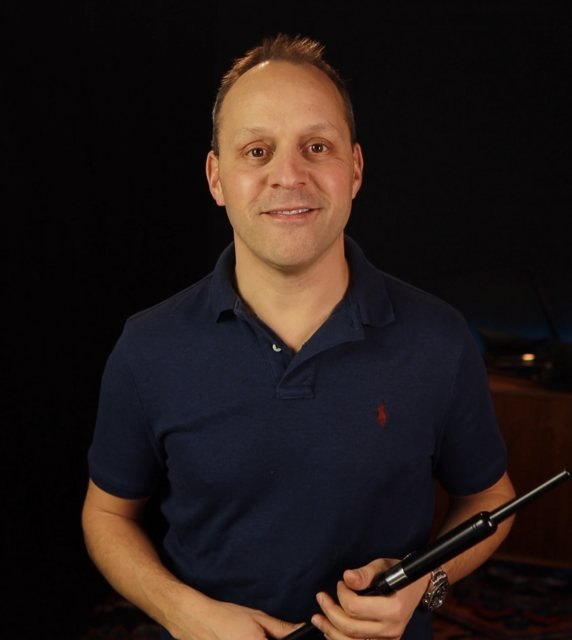
The Inner Circle
Ready to take your piping further?
Get unlimited access to 790+ lessons, videos and tunes, plus a live Zoom class with me every week. Every replay is searchable to the exact moment anything was taught.
$399/year works out to $33.25 a month$45/month month to month
For pipe bandsBring your whole band into the Inner Circle
Every piper gets their own login, and we start with a band coaching session on Zoom with me to map out your season. From $10 per piper per month.See band memberships →