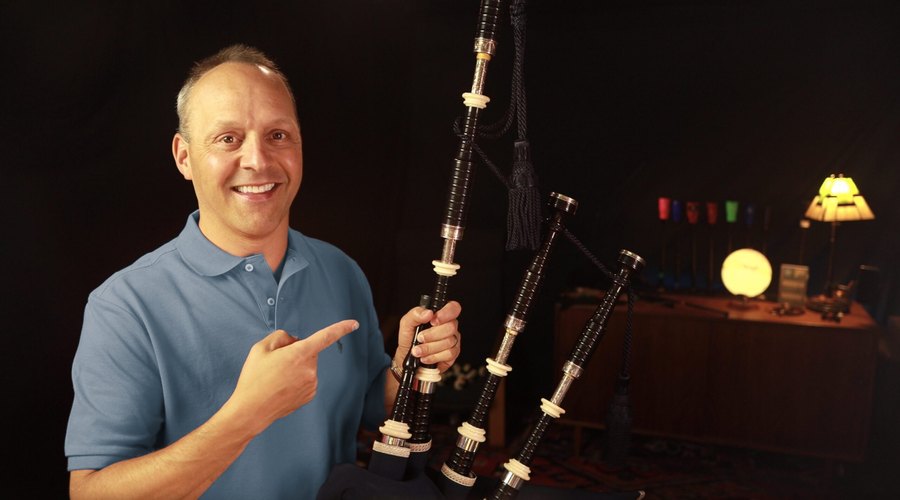
▶ Video lessonProduct guide
Selbie Drone Reeds: These Reeds Take Almost No Air (and They Still Won’t Shut Off)
Selbie Drone Reeds are plug and play: no breaking in and no fiddling. On my Bagpipe Gauge they kick in at about 10 inches of water and still will not shut off, and on a tuner with my InTune Mic the line stays green and flat. I take a set apart up close and measure every reed.
The Main Ideas
Selbie Drone Reeds are plug and play. You put them in and you play. There is no setup process and no wondering whether you have them right. In the video I take them apart on camera, then prove it two ways instead of just telling you.
The details are in the reed. A curved, removable tongue with a texture underneath, a tuning screw with a locking nut, and a clear silicone bridle you can move precisely. The newer green bass is a different material, for greater stability and better tone.
Then the numbers. With my InTune Mic and a tuner app, the line stays green and flat, which means in tune and locked in. On the Bagpipe Gauge with my Precision Reed Tester, they kick in at about 10 inches of water and I can barely make them shut off, well into the 30s. You can get them at BagpipeLessons.com/selbie.
At a glance
| What drone reeds control | How stable your tone is and how much air your pipes take |
|---|---|
| Made | In Scotland, from what Selbie calls imitation cane |
| Body colors | White tenors, and the newer green bass |
| Kick-in pressure | About 10 inches of water, the bass at about 10 to 12 |
| Where most pipes play | Around 25 to 30 to 35 inches of water |
| Setup | Plug and play, zero adjustment out of the package |
| How long they play like new | Months, or a year or more, depending on care and how much you play |
| Where to get them | BagpipeLessons.com/selbie |
Video highlights
“You put them in and you play. That’s it. No setup process, no wondering whether you’ve got them right.”
“A stable reed makes you sound better than you are. An unstable reed magnifies every little fluctuation and makes you sound worse than you are.”
“So these Selbie reeds have the best of both worlds. They take almost no air, and they still don’t shut off.”
“Modern drone reeds should play like new for a really long time, months, or a year or more, depending on how well you look after them and how much you play.”

Free guideThe Ultimate Guide to Bagpipe Drone Reed Setup and MaintenanceMy free guide to setting up, adjusting and maintaining your drone reeds like a pro, so your pipes stay in tune.
Get the free guideThe reeds and gear in this video
 Selbie Drone ReedsPlug and play drone reeds with a curved tongue, a locking tuning screw, a clear silicone bridle and a new green bass.Learn more →
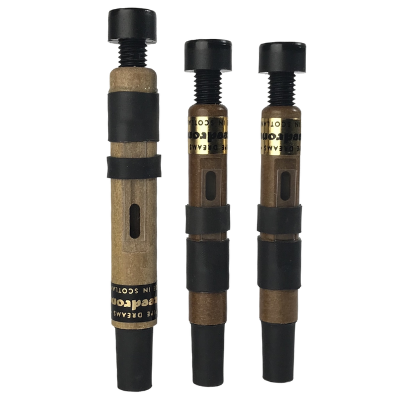 Ezeedrone Exclusive Combo Reed SetThe Ezeedrone set I compare the Selbies with in the video.Learn more →
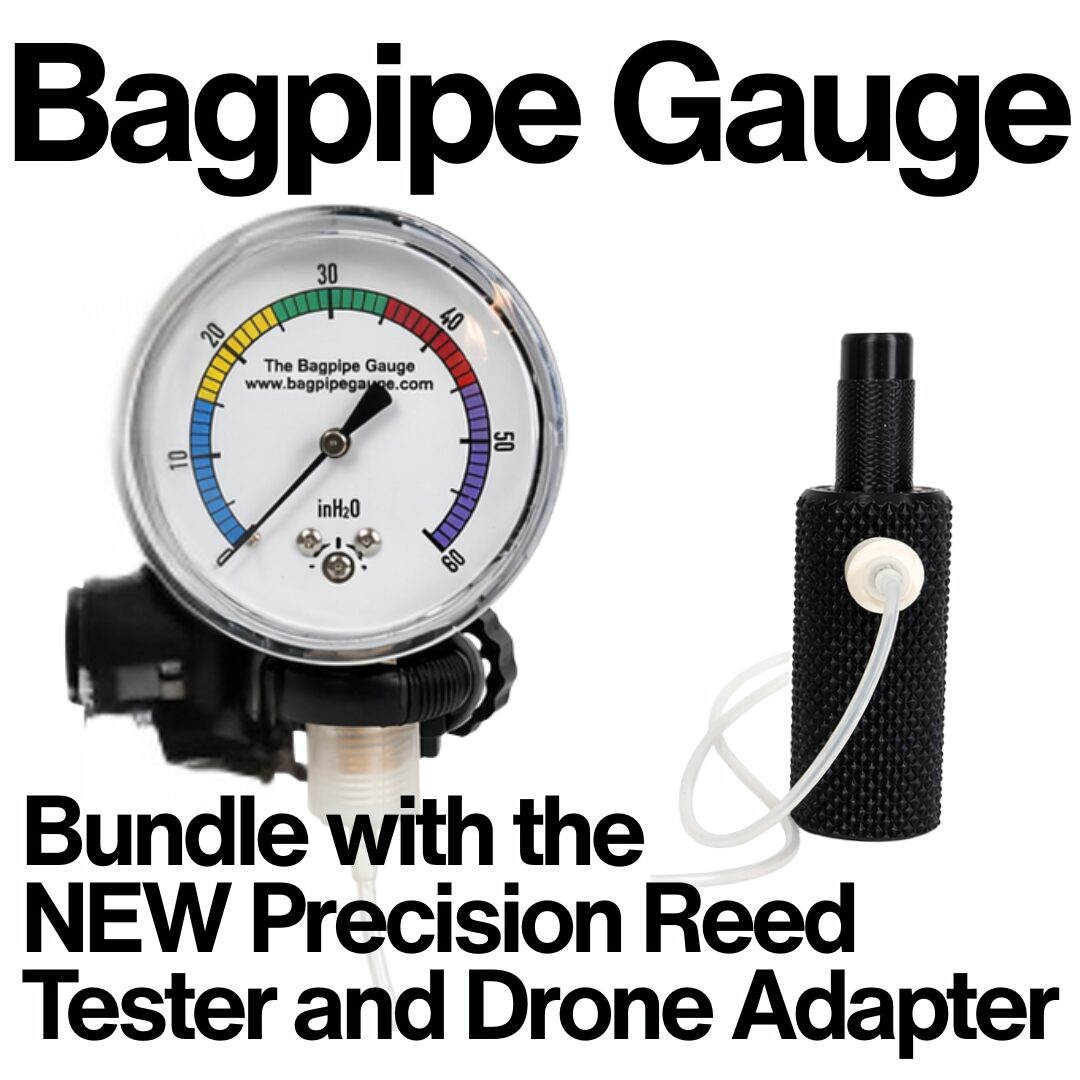 Bagpipe GaugeSee exactly how much pressure your reeds take and how steady your blowing is.Learn more →
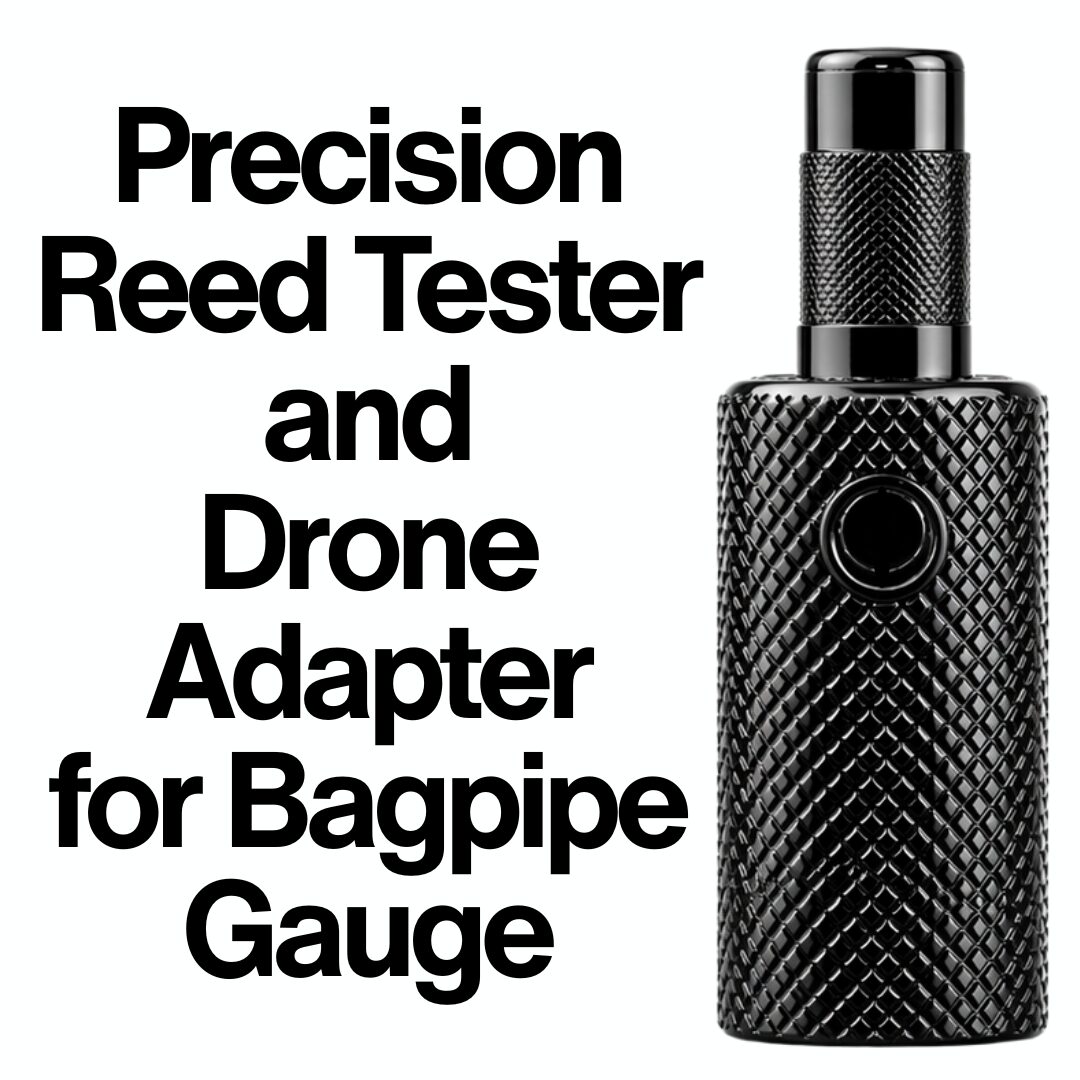 Precision Reed Tester and Drone AdapterTest each drone reed individually with the Bagpipe Gauge.Learn more →
 InTune MicClips onto your pipes and sends the sound wirelessly to your phone, so you can use your tuner apps.Learn more →
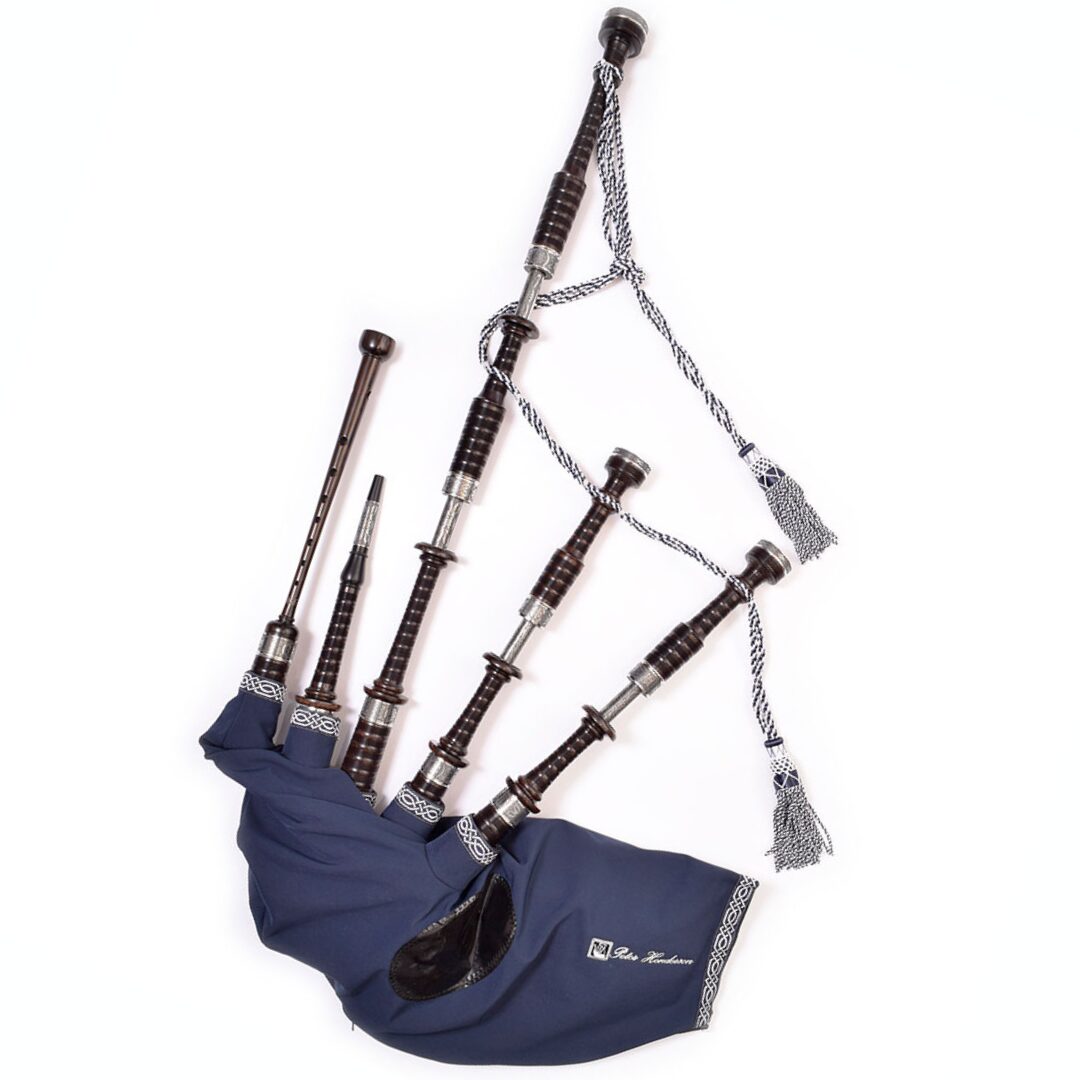 Peter Henderson PH01 BagpipesAfrican blackwood pipes from R.G. Hardie, combed and beaded, with imitation ivory (PH01) or blackwood (PH02) mounts.Learn more →
 All Drone Reeds at BagpipeLessons.comAll the drone reeds I sell, including Ezeedrone and Selbie.Learn more →
 Waxed HempIf you want a snugger fit for your Selbies, a little waxed hemp on the reed seat does it.Learn more →
Your questions, answered
Tap a time to watch that part of the video.
What do drone reeds actually do for my bagpipe sound?
A huge part of the bagpipe sound comes from the drones. Two things about your drone reeds have a big impact on how your pipes sound and feel: how stable your tone is, and how much air your pipes take.
How do Selbie and Ezeedrone drone reeds compare?
They are quite similar in shape and dimensions: a small tongue, a bridle and a tuning screw. Ezeedrones have a brown body with a clear tongue and a black bridle. Selbies have a white body with a black tongue and a clear bridle.
What are Selbie drone reeds made of, and where?
They are made in Scotland. Selbie calls the material imitation cane, a synthetic that is really stable. The tongues are black plastic, precision engineered and injection molded, which is a big part of why they are so consistent from reed to reed.
What is special about the Selbie tongue?
I think the curved tongue is one of the secrets of Selbies. It has a T shape and it is removable. The tongue itself is curved, and the bottom of it has a very interesting texture.
How do I tune a Selbie drone reed?
There is a tuning screw at the end that adjusts the pitch, so you can get your drones tuning in exactly the right position. A locking nut lets you lock the screw in place so it is never going to move.
What does the bridle on a drone reed do?
It controls how much air the reed takes, and the pressure where the first tone, the second tone and the shut off happen. The Selbie bridle is clear silicone, easy to move, and you can see exactly where you are moving it.
How can I keep track of bridle adjustments?
Before you adjust anything, take a pencil and draw a line on both sides of the bridle. Then you can see exactly how far you have moved it, with no guessing. To get back to the factory settings, move the bridle back between the lines.
Why does the bass drone reed matter so much?
So much of your pipe sound comes from the drones, particularly the bass, and it is the reed that most often causes trouble for pipers. The new green bass is a different material for greater stability and better tone. A better, efficient bass makes your whole instrument more stable and more comfortable to play.
Are Selbie drone reeds really plug and play?
Yes. You plug them into your pipes and play. If you want a more secure fit you might add a little hemp or dental floss, but you are up and going in seconds.
Do drone reeds need to be broken in, and do pipes have to be hard?
That old idea in piping is not true anymore. These reeds are really good right away, with no breaking-in process and no fussing.
How do I put new drone reeds into my bagpipes?
I start with the bass drone, then the middle tenor, then the outside tenor. The reed seats are threaded, so they will never fall out. I add a little dental floss to get a snug fit.
How can I see how steady my drone reeds are?
I clip my InTune Mic onto the pipes, and it sends the sound wirelessly to my phone so I can use my tuner apps. On the tuner I look for a green line, which means in tune, and a flat line, which means locked in and solid.
How much air do Selbie drone reeds take?
On the Bagpipe Gauge they kick in at about 10 inches of water, and the bass at 10 to 12, under 15. Most people play their pipes around 25 to 30 to 35. Even so, the reeds still do not shut off.
Why do some synthetic drone reeds shut off?
Older synthetic reeds often do not have a sweet spot. Close the reed down with the bridle and it takes less air, but it shuts off while you play. Open it back up and it takes too much air. Selbies take almost no air and still do not shut off.
How do I know when my drone reeds need replacing?
Ask how long your reeds will play like new, not how long they will last. Modern drone reeds should play like new for months, or a year or more. They usually fade gradually, losing stability, efficiency and steadiness, and you do not tend to notice.
Each week, the Inner Circle's lively sessions are designed to benefit pipers of all skill levels, all around the world.
LEARN FASTER. FIND GREATER ENJOYMENT FROM YOUR PIPING. JOIN ME.
Join the Inner CircleFull video transcript
0:00 Plug them in and play
Hey everybody, Jori Chisholm here from BagpipeLessons.com.
Today I want to talk about a special set of drone reeds that does something most drone reed sets can’t. You put them in and you play. That’s it. No setup process, no wondering whether you’ve got them right.
These are Selbie Drone Reeds.
I’m going to show you up close exactly why they work as well as they do, because the reasons are in the details, and they’re details you can’t necessarily see in a photograph.
But I’m not just going to tell you they’re good. I’m going to show you.
First I’m going to play them for you with my InTune Mic, with the tuner app running, so you can actually watch how steady they are on the screen. Then I’m going to put each one in my Precision Reed Tester with the Bagpipe Gauge, so you can see exactly how little air they take and how steady they are.
Two demos, real numbers, right in front of you.
Now, before we look at them, let’s be clear about what your drone reeds are actually doing.
0:52 What your drone reeds are actually doing
A huge part of the bagpipe sound comes from the drones. That rich, steady, room-filling sound is what makes your instrument sound like a bagpipe. And there are two things about your drone reeds that have a big impact on how your pipes sound and feel: how stable your tone is, and how much air your pipes take.
Stability means that when you’re blowing, the pressure moves a little, and it always does because we’re human, the sound doesn’t. A stable reed makes you sound better than you are. An unstable reed magnifies every little fluctuation and makes you sound worse than you are.
Efficiency is about the sound you’re getting for the air you’re blowing. Every bit of air escaping through a drone reed that’s open too wide is air you have to put back in through blowing.
So what we want is reeds that take the least amount of air possible while still sounding great and being rock solid. These are the two things we’re going to look at. I’m going to measure them and show you.
Let’s look at the reeds first.
1:53 Up close: Selbie next to Ezeedrone
These are the Selbie Drone Reeds. Now, if you’re familiar with an Ezeedrone reed, they’re actually quite similar in shape and dimensions: a small tongue, a bridle, and a tuning screw. Ezeedrones have a brown body with a clear tongue and a black bridle. Selbies have a white body with a black tongue and a clear bridle.
Selbies are well known for their white-colored bodies, and the original set with the white bass and the white tenors is really, really good. They’ve upgraded the bass to this green material, which is even better.
2:17 White bodies, the new green bass, and Neil Selbie
Selbies are made in Scotland.
Selbie refers to the material the reeds are made out of as imitation cane. It’s some sort of synthetic material that is really stable. The tongues are black plastic, and they are precision engineered and injection molded, which is a big part of why they’re so consistent from reed to reed.
I think one of the secrets of Selbies is the curved tongue. The first thing you can see is that the tongue has this T shape. It’s removable. And if you look at the tongue itself, it’s curved. If you look at the bottom of the tongue, you’ll see it has a very interesting texture.
2:48 The curved tongue and the T-joint
Now, this curve is really important, and I think it explains one of the most impressive things about Selbie reeds.
At the end, you can see there’s a tuning screw. This allows you to adjust the pitch of the reed so you can get your drones tuning in exactly the right position. And it has this really cool locking nut, which lets you lock the screw into position so it’s never going to move.
3:24 The clear silicone bridle
The bridle is a clear silicone bridle, and this is really great to work with. It’s easy to move, and because it’s clear you can see exactly where you’re moving it.
The bridle is really important because it controls two things: how much air the reed takes, and the pressure where everything happens. The pressure of the first tone, the second tone where it kicks in, and then where it shuts off. So you want a bridle you can move precisely. That’s really important.
3:51 The pencil trick before you adjust anything
Before you make any adjustments on your new Selbie reeds, I like to take a pencil and draw a line on both sides of the bridle. So when I make tiny little adjustments, I can see exactly how far I’ve moved the bridle. There’s no guessing and hoping that you moved it just the right amount.
And also, if you ever want to get back to the factory settings, just move the bridle right back between those little pencil lines. On a clear bridle you can see those lines even if they’re under the bridle.
This new bass is a different material, it’s not just a color change, for greater stability and better tone. This is a really great bass reed. It’s rich, it’s resonant, it’s full, it’s got a lot of depth to it. Sounds great in many different sets of bagpipes, and really stable. That’s what we love about Selbies.
4:19 Why the new green bass matters
The bass is important because so much of the sound of your bagpipes comes from your drone sound, particularly from the bass drone sound, and it’s also the reed that most often causes trouble for pipers.
A better bass reed matters because it’s more than just getting a better sound. A better bass reed that’s really efficient makes your whole instrument more stable and more comfortable to play.
Selbie reeds truly are plug and play, and here’s what that actually means. When you get your new Selbie reeds, you plug them in your pipes and play. If you want a better secure fit you might have to add a little bit of hemp or dental floss, but stick them in and you are up and going in seconds.
5:15 The old myth that pipes have to be hard
There’s this old idea in piping that anything worth having or worth playing has to be fought for. That your pipes have to be hard. That you can’t get a good sound with an easy reed. And that everything needs to be broken in and tweaked and adjusted with hours of fiddling.
That is not true anymore. These reeds are really good right away. No breaking-in process, no fussing. Just plug them in and you are ready to go.
All right, so let’s stop talking, start playing, and start measuring.
First thing we need to do is put the reeds into the pipes. Start with the bass drone. Now we’ve got our middle tenor. These drone reed seats are threaded, so they’re never going to fall out. And now the outside tenor. Adding a little bit of dental floss to get a nice snug fit.
5:46 Installing the reeds
So here we go. I’ve got my new Selbies in my PH01 Peter Henderson bagpipes. Let’s put them in the bag and see what happens.
6:40 The InTune Mic and the Tonal Energy Tuner
So this is my InTune Mic. It clips right onto the pipes and sends the sound wirelessly to my phone, so I can use my tuner apps with my pipes. There are no cables, there’s no holding a phone up to the drone. It just hears what’s going on with that exact drone or chanter.
Let’s plug it in and see what’s going on, so you can really see the steadiness of these Selbie reeds.
So I’ve got my iPhone set up here with my InTune Mic, and this is the Tonal Energy Tuner. What I love about this tuner is you can really see not only the tuning of your drones, but how steady they are.
So the things we’re going to look for are a green line, green means it’s in tune, and a flat line, which means it’s locked in and solid.
Flat line means steady. And finally, the bass. On a lot of sets of pipes the bass is the most pressure sensitive. Let’s see how we do here.
Walks right in. Amazing.
So that is what steadiness actually looks like. Green tells you the pitch is right, and flat tells you it’s really locking in.
8:30 What steadiness actually looks like
As a piper you can hear a wavering drone, but seeing it with that green flat line makes it really obvious. The line is flat because the reeds are very pitch stable. Something I love about these Selbie reeds is that they are not reacting to every small movement in the blowing pressure.
Stability is what makes the set easy to tune, and they will stay in tune once you’ve got them warmed up.
Now let’s look at the pressure that these reeds actually take, using my Precision Reed Tester with the Bagpipe Gauge plugged in.
So here we’ve got the Bagpipe Gauge with the Reed Tester. We can test each drone individually. This plugs right into the side of the Reed Tester, and we can plug this right onto our drone.
9:07 The Bagpipe Gauge and Precision Reed Tester
That’s really amazing. You can see how efficient these reeds are.
So it’s kicking in right at about 10 inches of water, which is really low.
9:24 Kicking in at 10 inches of water
What’s amazing about these Selbie reeds is that even though they kick in and operate at such a low pressure, with such little air escaping through the reeds, they still won’t shut off.
I can barely make it shut off, well into the 30s. Let’s check the other drones.
It’s exactly the same pressure on the other tenor, and we have done nothing to the reeds. This is exactly how they came out of the package, with zero adjustment. These truly were plug and play.
Let’s check out the bass. Amazing. Kicking in right around 10 or 12 on the gauge. Super air efficient, kicks in at a low pressure, very comfortable to play, very steady.
The pressure where the reeds kick in is very low. We’re talking 10, 12, under 15 inches of water. Most people, their pipes play around 25 to 30 to 35. But still, it doesn’t shut off.
10:39 The trap with older synthetic reeds
Now, the problem with some synthetic reeds, and especially older synthetic reeds, is that they don’t really have a sweet spot. You close the reed down with the bridle to make it more efficient. It takes less air, but now it shuts off while you’re playing. So then you open it back up by moving the bridle back. The reed keeps going, but now it’s taking too much air.
So these Selbie reeds have the best of both worlds. They take almost no air, and they still don’t shut off.
It’s kind of miraculous, really. And I think the key is that curved tongue with the texture on the underside.
11:12 What you get with Selbie Drone Reeds
So here’s what you’re getting with these Selbie Drone Reeds. Really easy to play, plug and play right out of the box with zero setup. Super efficient, super stable, with a world-class tone. The tenors are really smooth and lock in, and that really rich, resonant, deep bass.
I know pipers at every level who use these reeds. Beginners, or just players who want the ultimate ease of setup so they’re not fighting their instrument and they can just enjoy playing, all the way to the top end, world-class solo players and band players who want ultimate steadiness and a rich, amazing sound that truly locks in.
And these Selbie tenors, when they’re in tune, when they’re really in tune, it genuinely sounds like one reed. You might even find yourself checking to see if one of your tenors has shut off. But they’re both going. They’re just so perfectly in tune that it sounds like one. It’s amazing.
11:51 When two tenors sound like one reed
And finally, if you’re watching this and wondering whether it’s time to upgrade or replace your current set of drone reeds, don’t ask yourself “How long will my reeds last?” Instead ask, “How long will my reeds play like new?”
12:06 How long will your reeds play like new
Modern drone reeds should play like new for a really long time, months, or a year or more, depending on how well you look after them and how much you play.
But typically they just don’t break and stop working. They gradually fade out, losing stability, losing efficiency, losing steadiness. And you don’t tend to notice. I’ve got another video on my YouTube channel that walks through how to inspect and test your drone reeds to see if they’re really working how they should.
If you’re interested in getting some Selbie reeds, you can check them out at BagpipeLessons.com/selbie, S-E-L-B-I-E.
12:45 Where to get them
Everything in my shop is either something I have designed and invented myself, or something I have personally tested, use, and trust.
This is why all this matters. You love to play your pipes, and you love playing your pipes so much more when they sound great, feel great, when they’re easy to tune and they stay in tune. But you only get that when your pipes are properly set up and your reeds are working perfectly with your instrument, everything together in harmony.
That’s what we’re after. Life is too short to play bad reeds.
If you like this video, please hit the subscribe button and the little bell icon so you get notified every time I put out a new video. And check out some of the free videos, downloadable guides and resources over at BagpipeLessons.com/learn.
And if you want to take your piping to the next level, check out my Inner Circle membership. This is my online piping school where I do live Zoom classes for members almost every week, and you get access to hundreds and hundreds of hours of videos, lessons, tunes, downloads, product demonstrations and more. And you get one-on-one support from me to help you reach your piping goals. It’s all there in my Inner Circle membership.
All the links are in the description below. Thanks again for watching, and happy piping.
My exact words from the video, lightly cleaned up for reading. Click any time to jump the video to that moment.

About Jori Chisholm
Jori started BagpipeLessons.com in 1999, and in 2003 he became the first piper to teach one-on-one lessons by video. His online teaching has been featured on the front page of the New York Times, and thousands of pipers around the world have used his lessons, tools and products.
He is a four-time U.S. Gold Medalist for Piping, has won prizes at the Argyllshire Gathering, the Northern Meeting, Cowal and Braemar, and won the World Pipe Band Championships three times with the Simon Fraser University Pipe Band. He invented the Tone Protector, the InTune Mic and the Endurance Practice Chanter, and in 2011 he founded the World Online Piping & Drumming Championships.
More about Jori →
The Inner Circle
Ready to take your piping further?
Get unlimited access to 790+ lessons, videos and tunes, plus a live Zoom class with me every week. Every replay is searchable to the exact moment anything was taught.
$399/year works out to $33.25 a month$45/month month to month
For pipe bandsBring your whole band into the Inner Circle
Every piper gets their own login, and we start with a band coaching session on Zoom with me to map out your season. From $10 per piper per month.See band memberships →