
▶ Video lessonProduct launch
Endurance Practice Chanter Launch: The World’s First Practice Chanter with Complete Moisture Control
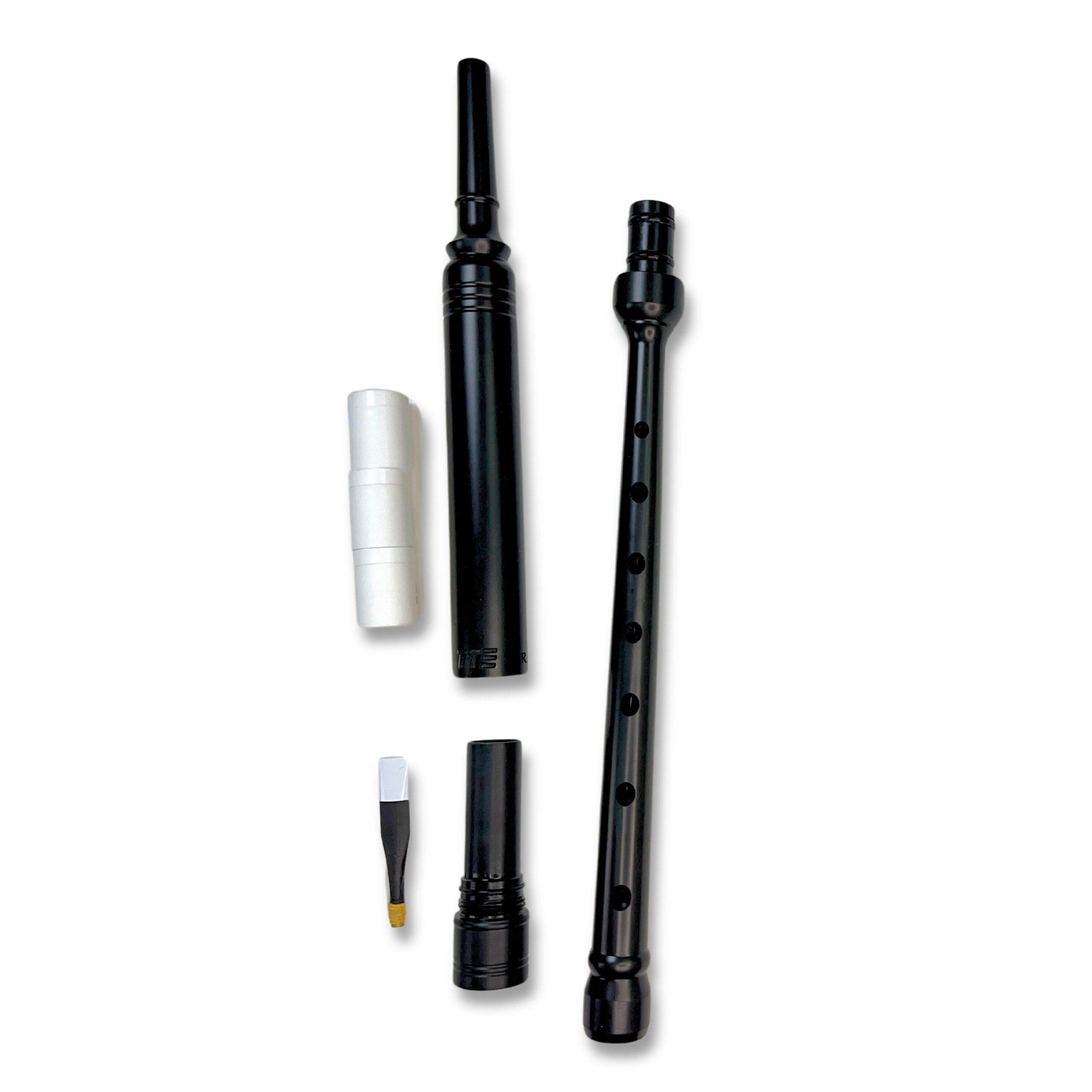
The Endurance Practice Chanter is the world's first practice chanter with complete moisture control. I designed it, and R.G. Hardie and Company makes it in Scotland. Three Endurance Cartridges filter the air so your reed stays dry for hours and even days, with no more spit, gurgling or cutting out. It comes in regular, long and junior sizes.
The Main Ideas
In this live launch I show you the Endurance Practice Chanter, the world's first practice chanter with complete moisture control. I designed it here in the United States, and it is made by R.G. Hardie and Company in Scotland. You can play for hours and even days without moisture on your chanter.
I also walk through the history of innovation in the bagpipe world, from synthetic drone reeds and moisture control bags to the Tone Protector and tuning apps, and why the practice chanter was left behind. Then I show how the Endurance Cartridges work, the three sizes, and how to dry the cartridges in the oven.
At a glance
| What it is | The world's first practice chanter with complete moisture control |
|---|---|
| Designed by | Me, here in the United States |
| Made by | R.G. Hardie and Company in Scotland |
| Sizes | Regular, long (extended) and junior (child size) |
| How it stays dry | Three Endurance Cartridges in a compartment in the top, filtering the air |
| How long cartridges last | In my experience, days |
| Re-drying | Air dry them, or put them in the oven at 250 degrees Fahrenheit for about an hour |
| Where to buy | My shop at BagpipeLessons.com/endurance |
Video highlights
“It’s the world’s first chanter that has a full moisture control solution, so you can play for hours and hours and even days without getting any moisture on your practice chanter.”
“The moisture gets in there and starts to clog your reed. The reed starts to gurgle, starts to go out of tune. It can actually cut out.”
“I would say it depends on the person, it depends on how much you play, and also how wet a blower you are, but my experience is days.”
“You get my personal guarantee that you’re going to be happy with this chanter.”

Free guideYour First 100 Days as a PiperMy free guide to your first 100 days: what to get, what to practice, how long it takes, and how to stay on track.
Get the free guideThe chanter and gear in this video
 Endurance Practice ChanterThe world's first practice chanter with complete moisture control. Regular, long and junior sizes.Learn more →
 Endurance Cartridges (Set of 3)The cartridges that keep your reed dry. Made for the Endurance Practice Chanter, and easy to re-dry.Learn more →
 Tone ProtectorThe world's first digital chanter cap with two-way humidity control, for a steadier reed and less warm-up time.Learn more →
 Bannatyne Pipe BagsEvery Bannatyne hybrid bag size I sell, including my custom sizes.Learn more →
 Dri-Flo Moisture Control SystemBannatyne's moisture control system: three tubes of silica gel that dry the air inside your bag.Learn more →
 Piper’s MetronomeMy metronome app built for pipers, with presets for every type of pipe tune.Learn more →
 InTune MicThe world's first wireless clip-on instrument mic for smartphones, for accurate tuning with your favorite app.Learn more →
 Bagpipe GaugePlugs into a drone so you can see your bag pressure and learn to blow strong and steady.Learn more →
Your questions, answered
Tap a time to watch that part of the video.
What is the Endurance Practice Chanter?
It's my new practice chanter, the world's first with a full moisture control solution. I designed it here in the United States, and it's made by R.G. Hardie and Company in Scotland. You can play for hours and even days without getting any moisture on your practice chanter.
Why does my practice chanter fill up with moisture and spit?
It's your condensed breath, and every piper has the same problem. The moisture clogs your reed, the reed starts to gurgle and go out of tune, it can cut out, and it shortens the life of your reed. That is the problem I set out to solve.
What sizes does the Endurance Practice Chanter come in?
Three. The regular size is the one I play and what most people play. The long (extended) size is closer to the length of a pipe chanter and has a slightly lower pitch. The junior size has holes a little closer together, for kids or smaller hands.
How does the moisture control system work?
The top is two parts instead of a plain tube. You unscrew it, and inside is a compartment holding three Endurance Cartridges that filter the air. They're designed for this chanter, and your reed stays completely dry.
How long do the Endurance Cartridges last?
It depends on the person, how much you play and how wet a blower you are, but in my experience it's days. You can also get an extra set in the shop, so you always have a dry set ready to go.
How do I dry the Endurance Cartridges?
Take them out and let them air dry, or regenerate them in the oven at 250 degrees Fahrenheit for about an hour. You don't have to take them apart. Do not microwave them, because you can't control the temperature as precisely as in the oven.
What is inside the Endurance Cartridges?
Silica gel, the same common substance as the little "do not eat" packets that come with shoes or electronics. It's used in many different industries, and it's totally food safe and non-toxic.
Where can I buy the Endurance Practice Chanter?
From my shop at BagpipeLessons.com, exclusively for now. Down the road we may add other retailers, but for now orders come direct from my shop.
Is there a guarantee on the Endurance Practice Chanter?
Yes, you get my personal guarantee that you'll be happy with it. Defects are extremely unusual with anything from R.G. Hardie, but if you ever have an issue, email me through my website and we'll make it right.
Does the Endurance Practice Chanter use hemp?
No. It has O-rings, so it just slides together nicely. Hemp is super gross and starts to rot and get funky, so it's nice not to have to worry about it.
Are the finger holes on the long chanter closer to a pipe chanter's spacing?
Yes, they are slightly more spaced out. Most of the extra length is below the holes, where your fingers don't even play. It gives a slightly lower pitch, and it's easier to get a lower pitch with the long chanter.
Which reeds work with the Endurance Practice Chanter?
It comes with a high-quality R.G. Hardie practice chanter reed, their standard one. I've tested it with every type of practice chanter reed I can get my hands on, including the John Walsh reed, and I'm confident that a practice chanter reed you love will work with it.
Each week, the Inner Circle's lively sessions are designed to benefit pipers of all skill levels, all around the world.
LEARN FASTER. FIND GREATER ENJOYMENT FROM YOUR PIPING. JOIN ME.
Join the Inner CircleFull video transcript
Hey, everybody, we are live. Sorry about that, there’s a bit of a glitch there with the last live stream. Let me just go and send a link out to let everybody know what’s going on with the live stream, and we will get started here in one second. All right, so let’s see here. Okay, send a link out. Okay, cool. Sorry, everybody, for the little glitch there, but I’m excited to be with you and tell you all about my new product. This is very cool. Thanks for joining in live if you are watching live on YouTube. So pop a note into the chat there and tell us where you’re from and what’s going on.
So let me show you what I have for you. This is my new practice chanter, which promises to solve once and for all the moisture problems that you have with practice chanters. And here it is. It’s called the Endurance Practice Chanter. It’s designed by me, Jori Chisholm, here in the United States, and it’s made by the famous R.G. Hardie and Company, bagpipe makers in Scotland. So I’m really excited about this chanter. It’s the world’s first chanter that has a full moisture control solution, so you can play for hours and hours and even days without getting any moisture on your practice chanter.
So I’ll show you up close in just a minute here, but here’s what we’re going to talk about today. We’re going to talk about the history of this practice chanter, where I came up with the idea, the needs and issues that it solves, and how it fits into the history of some other innovations in the bagpipe world. So go ahead, if you’re watching live, just pop something into the chat there and say where you’re from and introduce yourself. And if you’re watching on the replay, please do the same thing.
So I was looking at a picture, I wonder if I have that picture here, but I found a picture of me playing my bagpipes when I was a kid at our local Highland Games, and this is with my first teacher, Colin McKenzie, and he’s tuning up my pipes. I was looking at my setup, this would have been in the early 1990s, and I was looking at my setup in that photo and something struck me, which was that the instrument that I was playing, my bagpipes, this was just before the synthetic revolution hit the bagpipe world. And those pipes that I was playing would have been pretty identical to bagpipes from a hundred years before.
So we’re talking from the late 1800s all the way through until the early 1990s, there had been very little change in terms of the overall design of the bagpipe. So the bagpipes were wood, the pipe chanter was wood, the pipe chanter reed was cane, the drone reeds were cane, waxed bridle.
I had a leather bag, and the pipes were actually quite old pipes. They’re Lawrie pipes from the 1920s. But all the accessories, bags, reeds, everything was before this modern synthetic revolution took over the bagpipe world. I think the only thing on that set of pipes that was recent would have been the mouthpiece was a plastic mouthpiece, and that would screw onto the wooden blowpipe. It had a leather flapper valve. So really quite an old instrument in terms of how it was put together.
We have Danny from Boston. Hi, Danny. Thanks for joining. And we have Colin from London. Fantastic. So thanks for joining and for introducing yourself. So we’ve really seen some incredible changes in the last 25 to 30 years for the bagpipe. So let’s talk about what some of these major innovations have been.
Well, I think a really big one would be synthetic drone reeds. So instead of those traditional cane reeds, which had a great sound but were really finicky, very sensitive to moisture, they were handmade from a natural material, so there was a lot of variety, a huge hassle. And if you played bagpipes with traditional cane drone reeds before moisture control systems, we all had this fear that your pipes were going to go out of tune and possibly have a drone shut off at any point. So having synthetic drone reeds that have a great sound, that are stable and efficient, that stay in tune and are reliable, just a huge innovation.
The other thing that we have now is pipe bags where you can get inside the pipe bag and you can have a moisture control system in there. So the first very well-known and widely played synthetic bag with a moisture control system was the Ross pipe bag from Australia. The way it works is you had tubes that would connect to the bottoms of your stocks, and the tubes were connected to a canister which had a desiccant in it. A desiccant is like a substance or a material that absorbs moisture, and it worked really, really well. Some people still play the modern version of the Ross canister and bag.
So you can blow your hot, steamy breath into the bag, and there’s no way for that air to get to your reeds unless it passes through this canister. So it allows you to play for hours and hours and have your drones stay warm and dry. So there are many other canister systems and bags on the market now. My favorite is the Bannatyne pipe bag. I love the hybrid bag. It has a leather outside and a zipper on the bottom and a synthetic inner liner, so you really get the best of both worlds: a synthetic bag that has very little maintenance, stays airtight, and you don’t need seasoning, but it has that traditional feel from the leather outer layer.
So we got synthetic drone reeds, we have moisture control systems and synthetic bags with zippers. There’s also the Tone Protector, which is my invention, and somebody described the Tone Protector as the biggest innovation for the pipe band world since synthetic drone reeds and bags with moisture control systems.
So what that allows you to do is, just how you have a desiccant system to keep the air dry to your drones, and that’s really good because the drones are synthetic and they work best when they’re in a warm but dry environment, you have your cane pipe chanter reed, and it functions best when it has a warm but moist environment, not too wet but just the right amount of moisture content in that cane reed, so that it sounds its best, it has a nice, resonant, rich tone that we like.
And what the Tone Protector does, it’s a reed cap, and you can see them back there on the desk behind me. What the reed cap does is it stores the reed in an enclosed environment where the humidity is stabilized and it’s held at a precise level. So my Tone Protector reed caps hold the humidity around your pipe chanter reed at 84%, and also have a case where you can store all your extra reeds in there. So that’s been a huge innovation in terms of improving the sound and the quality and the consistency of our pipe chanter reeds.
So we have Stephen coming in. Thanks for introducing yourself. We’ll talk about the finger holes and the specs of the new chanter in just a minute. And then somebody is asking about an Infinity practice chanter, which doesn’t exist, so I think you’re confused. You might be thinking about the Infinity pipe chanter, but there is not an Infinity practice chanter. So let’s get back into some of these innovations. Thanks for the comments, folks.
So we got the synthetic drone reeds, hybrid bags, we got Tone Protectors for controlling the humidity content in our pipe chanter reeds. We also have other learning tools. So we have all kinds of apps for the smartphone. We have tuning apps, we have metronome apps. I created a metronome app called the Piper’s Metronome, which you can check out, and it’s got all these built-in presets for your bagpipe tunes. So unlike other metronome apps, it’s got all this stuff built in just for the way that pipers play tunes and the way that drummers and pipe bands play tunes. So all the tunes are preset: time signatures, rhythms, pulsing, dot-cut, all that stuff.
So we got metronome apps, we have tuner apps. One of my most popular products after the Tone Protector line would be the InTune Mic. What that is is a wireless clip-on mic that connects to your smartphone, lets you use your favorite smartphone tuning apps, and you can tune your drones and your chanter in a wireless fashion. Just because of the practical limitations of trying to tune your drones holding a tuner up there and trying to see it, it’s impossible unless you have some sort of microphone system.
Then we’ve got the Bagpipe Gauge, a tool that I invented for helping people learn how to blow their pipes steady. So lots of great stuff out there for improving the reliability of our instruments, helping us learn, helping us develop our ear, tuning, reducing maintenance, so many things. And I’m sure I’m not thinking of everything. So if you’re thinking of something else that I haven’t mentioned, throw that into the comments, into the chat.
I think one of the other major innovations in the history of bagpipe manufacturing would be the move to these synthetic products. So in addition to the synthetic drone reeds and hybrid pipe bags, we also have this high-quality plastic that we can make pipes out of, blowpipes, pipe chanters and practice chanters, where 25 or 30 years ago I think most pipers were playing blackwood pipe chanters. And certainly now in pipe bands, there are very, very few pipe bands in the world that play a full set of blackwood chanters. Mostly the pipe bands have moved to plastic chanters, and even in the solo scene as well, pipers are moving to these plastic chanters.
So a plastic material, sometimes they call it Delrin, sometimes they call it polypenco or acetal, and they’re all very similar material, which is this really tough, resilient, synthetic plastic-like material which machines up really well, doesn’t crack, doesn’t warp, and has a really good sound. I mean, it allows for very precise manufacturing with a high level of precision and quality and detail. And if you’re looking for that traditional look of your practice chanter or your pipes, it looks very similar to African blackwood, which is what traditional pipes have been made out of.
So one of the things that’s been basically completely left behind in the world of bagpipes in terms of innovation is the one thing that pipers use almost every single day, and that’s the practice chanter.
So I was thinking about, looking at different practice chanters, and I’ve got a whole bunch of them here because I’ve been playing for so many years and teaching for so many years. If you look at a bunch of different practice chanters, they’re basically the same design, except for the materials and the decorations are different, but there’s very little difference in practice chanters. You know, we used to see a lot of blackwood, now we see a lot of plastic, and I think it’s a great innovation to make these practice chanters out of this synthetic material for cost and for toughness and resiliency.
And there have been some attempts at having a water trap type system in a practice chanter, but even with those, you get a lot of moisture, and that’s the problem that every piper has. I’ve been teaching, and I was just in Dallas teaching this last weekend at a great event down there, and everybody seems to have the same problem, which is, as you play and as you practice on your practice chanter, it just fills up with water and spit and moisture, and what that is is from your condensed breath.
So even though we have these moisture control systems that work really, really well for the bagpipes, my favorite is the Dri-Flo system, that’s lightweight and very powerful and effective, comes from Bannatyne, there’s been nothing for the practice chanter. So that’s the problem that I’ve been trying to solve.
The moisture gets in there and starts to clog your reed. The reed starts to gurgle, starts to go out of tune. It can actually cut out. It actually shortens the life of your reed and it changes the sound, and it’s just annoying. And you have to stop and blow out the spit, dry out your chanter. Pipers are flicking their chanters and taking their reeds out and wiping things out and brushing them out, and it’s just a huge hassle, where ideally you’d have a practice chanter that sounds great, feels great to play, and allows you to just do your practice, and you don’t have to be dealing with this gross issue of moisture and spit and drool and stuff gurgling and spraying out of the holes when you just want to practice and play your tune.
So that was what I was trying to address with my new practice chanter, and this is what I have, and this is what I’m going to show you right now. So this is the new Endurance Practice Chanter, and this is designed by me and it is built in Scotland by R.G. Hardie and Company. So it looks very similar to other practice chanters, and that was really important for me to have a classic look. Some cool little details here that integrate some modern features with this classic design of a practice chanter. So this is what it sounds like.
So there it is. It comes in three sizes. This is the standard size, regular size. This is what most people play. This is the chanter that I play. It also comes in the extended size, so that’s here. This is long or extended, and this is closer to the overall length of a pipe chanter, so some people really like that. It also has a slightly lower pitch, and some players like that.
In all the pipe bands that I’ve played in over the years, there has been a mix of people playing the longer chanters and the regular size chanters, but some pipe bands I know, they really want everyone to have a matching chanter, and they’ll go for the longer ones. And then it comes in the junior or the child size, so this one the holes are a little bit closer, the overall length is shorter, and this would be for kids or for someone with just smaller hands and looking for a little bit of a closer spacing. But I would say for most people, you’re going to be looking at either the regular length or the long, depending on personal preference.
So how does the moisture control system work? Well, R.G. Hardie has a practice chanter that they’ve been making for a while called the Twist Trap practice chanter. It has a water trap built in there, but it just was not enough for me, and it just didn’t give me the complete and full moisture control that I was looking for. So I’ve been working on this for years, and then I reached out to Alistair Dunn at R.G. Hardie, the director there of their product and bagpipe business, and we collaborated on this product. So this is my design, built in Scotland in their shop, in their factory.
So a normal practice chanter has three parts. It’s got the bottom part where you do the fingering and play the music, it has the reed, and then there’s the top that goes over the reed. So those are the three. And on a normal practice chanter, the top is nothing more than a tube that you blow through that covers the reed. But on the Endurance Chanter, it’s actually two parts on the top. So you unscrew, just like if you’ve seen the Twist Trap practice chanter, it’s a similar setup there, but what you have inside is a secret compartment in here, and inside you have the canisters. So you have the three Endurance Cartridges, and these filter the air.
So these cartridges, it comes with a set of three of these Endurance Cartridges, and they are designed specifically to be used with this chanter. They won’t work with any other chanter. And what it allows you to do is play for hours and hours and hours and even days, and your reed stays completely dry. It’s also designed to be very free-flowing in terms of air. You’re not going to notice any restriction at all when you play.
Now, another question that people will ask is, how long do these things last? I would say it depends on the person, it depends on how much you play, and also how wet a blower you are, but my experience is days.
So it’s not just minutes or even hours, but it’s days. And what you can do, after you’re done playing, or once you’ve reached that point where the cartridges are used up and they’ve absorbed as much of the moisture as they can, you can take them out and leave them out and let them air dry. The other thing you can do is you can regenerate them in the oven. So, piece of cake, take these, put them on a little tray or some little dish in your oven at 250 degrees Fahrenheit for about an hour.
So that’s just a standard protocol for regenerating silica gel, and that’s what’s inside these, silica gel. If you’ve ever bought a pair of shoes or some electronics or something that comes in a package, and there’ll be one of those little packets in there that says, you know, do not eat, that’s silica gel. So it’s a very common substance, totally food safe, a standard product that’s used in many different industries. No problem there, totally non-toxic. So what you’re going to do is just drop those in the oven.
Now, you can also get an extra set of these Endurance Cartridges. We also sell these on the shop. And probably, if you’re playing a lot, it’s probably good to get an extra set, and that way you always have a dry set that is ready to go.
So that’s what this is. This is the Endurance Practice Chanter, and this is available from me on my BagpipeLessons.com shop exclusively right now. So at some point we’re going to be adding in some other retailers, so down the road you may be able to reach out to your local retailer, wherever you get your bagpipe supplies. But for now, especially in this initial stage where we’re just getting so many different orders, they’re all going to be coming direct from my shop. So what other questions do you have? Pop them in the chat there.
What I love about this practice chanter is that you can just play. You can pick it up and play and put it down. And all pipers, we know this, that when your practice chanter is nice and dry, the reed sounds crisp, everything’s in tune, it’s sort of efficient. And then as things start to fill up with moisture and spit, the reed starts to cut out, the reed goes out of tune, you get the gurgling, it’s really annoying. And what the feeling is here with the Endurance Practice Chanter is, every time you pick up your chanter and throughout your practice sessions, it just has that nice, clear, crisp, in-tune sound of a dry reed, because your reed stays completely dry.
The materials and the craftsmanship are all done to the highest level by R.G. Hardie and Company. They’re one of the most trusted brands and companies in the bagpipe world, and have been for decades. So you know it’s going to be good. You get my personal guarantee that you’re going to be happy with this chanter. It’s extremely unusual to have any kind of defects or issues with anything that comes from R.G. Hardie, but I stand behind it 100%. And if at any point in the lifetime of your owning the Endurance Practice Chanter you have any issues, you just reach out to me directly through my website, email me, and we’ll make it right. We’ll fix it, we’ll send you a new one. This should give you a lifetime of happy playing.
So it’s got the three different sizes. Regular, just for comparison here, I’ll hold up the three. So that’s the long one, and then there’s the regular-length one, and then here’s the junior one. So there we go.
So a common issue that people will ask about is, how close is the long chanter to the spacing of a pipe chanter? And I would say it’s pretty close. It depends on the pipe chanter, but because this is made by R.G. Hardie, it’s very similar to the Infinity pipe chanter. If you get my emails or if you followed my YouTube channel, you have seen me talking about the Infinity pipe chanter a lot, and it is a great chanter. It comes in a blackwood model and a plastic model. It also comes in a plastic model in concert B flat, so if you ever have the opportunity to play with other instruments, piano, guitar, church organ, or a band, that’s a great option, is to get the version in B flat.
So let’s put it back together, and I’ll play another tune for you. Oh, the other nice thing about the chanter is it has O-rings on it. So you see the O-rings there. It does not have hemp. There we go. So when you put that together, you’ll see it just slides together nicely like this. So no hemp. Hemp is super gross, and it starts to rot and get all funky. So you’re not going to have any moisture on here anyway because of the Endurance Cartridges and the moisture control setup, but it’s just nice not to have to worry about that hemp on there.
So one thing I’ll mention also about the Endurance Cartridges: when you dry these, you can either let them just sit out and air dry or you can dry them in the oven. You do not have to take them apart. So the moisture control systems that we have for the pipes, you have to take the canister out of your pipe bag, open your zipper, take your canister out. With the Dri-Flo, you have the three little tube canisters, and then you have to take them apart and dump the rocks out.
You have to dump the desiccant out into a dish or a plate or a tray and then put it in the oven, because of what it comes in, the plastic would melt if you put it in the oven. But not with these. If you regenerate your Endurance Cartridges in the oven at 250 degrees, you are fine. You do not need to take them out. The silica gel just is dried out through the heat.
Obviously there are air holes on both sides of the cartridges. That’s how you can blow through them, and the moisture will just be released from there. Do not microwave them. You can’t control the temperature in the microwave as precisely as you can in the oven. So when you get your Endurance Practice Chanter, all the instructions are going to be enclosed with your chanter when you receive it. 250 degrees, piece of cake. Great. So we’ve got a couple other comments here. Let’s see, Elio, thanks for joining, and then Danny is wanting to know when they ship.
So this is very exciting. I’ve released a bunch of products over the years, and with this Endurance Practice Chanter was the first time that I did a tiered release. So you may have seen on the BagpipeLessons.com social media stuff and through my email list that there was a pre-sale. So the pre-sale was an exclusive offer for people to sign up and to get access to see the chanter and to purchase it before everybody else, and we had a huge number of people sign up to get access to that pre-sale. Like, it blew me away. Way more than I thought. So a huge number of people signed up for the pre-sale, and then a huge number of people have already purchased the chanter.
So if you’re just hearing about the Endurance Practice Chanter right now, this is right now the worldwide launch to the public, and the website is live. You can order them right now. But there were some people who got on early who had the opportunity to order it over the weekend through the pre-sale.
We are almost sold out from the first batch. So everyone who ordered through the pre-sale, you are going to get your chanter, and we’re going to be shipping them out next week, hopefully by the beginning of the week, but that’s the plan, is to get them shipped out next week. So everyone who has bought through the pre-sale, you’re going to get it, and we offered a couple of bonuses for people that ordered through the pre-sale, so you’re going to get your bonuses shipped to you, and we’ll be in touch with you about email.
So for everybody else, if you want one of these Endurance Practice Chanters, get your order in now. We just are going to ship them out in the order that those come in. So we have already ordered more from R.G. Hardie based on the tremendous success from this pre-sale, and it’s just been fantastic to hear back from so many pipers who, this is something that really resonates with them, this challenge of dealing with spit and moisture and drool and stuff in the practice chanter.
And so it’s just been really cool to hear from pipers that are as excited as I am about this new product. So the pre-sale was awesome, and the overwhelming positive response has been very encouraging, and you’re going to get your practice chanters first from that first batch, and everybody else, get those orders in now, and we’ll ship them out as fast as we can. We’ve got the guys back at R.G. Hardie cranking away and making more of these chanters as fast as they can.
So what other questions do you have? Let’s take a look in here. So Stephen says, are the finger holes on the extended version closer to the actual pipe chanter spacing? Yes, they are. They’re just slightly more spaced out on the bottom. A big difference in the length between the regular and the long chanter is at the bottom.
So if we line up the holes, you’ll see there’s a lot of extra length here on the long one, but most of that is below here, where the fingers don’t even play. So it is very slightly longer. It’s maybe not as much longer as it seems, because a lot of the extra length for the long chanter is down below where you’re playing, and it does give a slightly lower pitch.
Now, you do have a lot of flexibility with the reed and with how you position the reed in the chanter and your reed selection to change the pitch, if you’re looking for a slightly lower or a higher pitch. The chanter does come with a high-quality reed from R.G. Hardie. This is their standard practice chanter reed.
Although I have tested the Endurance Practice Chanter with, gosh, well, every type of practice chanter reed that I can get my hands on. A very popular reed is the John Walsh reed, more expensive than most other practice chanter reeds on the market, but I think worth it. I love the Walsh reed. The R.G. Hardie reed is great there. The Fraser Waro. There’s one that looks like the Walsh style, that’s a green reed that comes from Canada. So I think, if you have a special practice chanter reed that you love, it’s going to work with your Endurance Practice Chanter. I’m confident with that.
Let’s see. Yeah, so Stephen, answer your question. I think it’s easier to get a slightly lower pitch with the long chanter, but you’ll have no problem if you’re playing in a group situation and you want to have some people playing the regular chanter and some people playing the extended chanter. It’s going to be fine. You’ll be able to get them close to each other. I found that in most group situations, with pipe band practice or workshops or whatever, there’s always a mix of long and regular practice chanters.
So, cool. Well, we’re kind of getting to the end of what I had planned here for my planned remarks. I just want to say thank you to everybody for tuning in, thanks for being part of the BagpipeLessons.com community. I do feel it’s a community. Yesterday was October 27th, 2024, and that was exactly 24 years since I launched BagpipeLessons.com way back in the year 2000. Remember that? And I started it as a way to give people information about the bagpipes and to help people find resources and information and inspiration for people who want to learn to play the bagpipe. So thanks for being part of the BagpipeLessons.com community.
Next year is going to be a big one. It’s going to be our 25th anniversary, and hearing from you is my inspiration to keep trying to come up with new products, new lessons, new ideas for videos. You know, bagpiping is my life, and thank you for supporting BagpipeLessons.com and for your great questions and for your enthusiasm and for your passion.
Right now, if you look in the description below, you’re going to see the links. As soon as we get off the live here, I’m going to put the links in there for where to order your Endurance Practice Chanter, but you can go right now to BagpipeLessons.com/endurance, and I’m going to type that into the chat right now so you can click on it. Boom, there it is, and get your Endurance Practice Chanter in the regular length, the long or extended length, and then the junior or the child size, and you’re going to love it.
You’re going to love being able to practice your tunes and work on your memorization and your technique and all your exercises and all the musical stuff that we love to do on your practice chanter, with no more moisture problems, no more spit, no more drool, no more gurgling, no more bubbling, no more spraying, no more dripping out under the sheet music. So thanks a lot, everybody. Check it out, the Endurance Practice Chanter, BagpipeLessons.com/endurance. We’ll see you next time, and if you like these videos, hit subscribe, and you’ll find out when I’m putting new videos here on the channel. Thanks, everybody.
Thanks, everybody. Happy piping.
My exact words from the video, lightly cleaned up for reading. Click any time to jump the video to that moment.

About Jori Chisholm
Jori started BagpipeLessons.com in 1999, and in 2003 he became the first piper to teach one-on-one lessons by video. His online teaching has been featured on the front page of the New York Times, and thousands of pipers around the world have used his lessons, tools and products.
He is a four-time U.S. Gold Medalist for Piping, has won prizes at the Argyllshire Gathering, the Northern Meeting, Cowal and Braemar, and won the World Pipe Band Championships three times with the Simon Fraser University Pipe Band. He invented the Tone Protector, the InTune Mic and the Endurance Practice Chanter, and in 2011 he founded the World Online Piping & Drumming Championships.
More about Jori →
The Inner Circle
Ready to take your piping further?
Get unlimited access to 790+ lessons, videos and tunes, plus a live Zoom class with me every week. Every replay is searchable to the exact moment anything was taught.
$399/year works out to $33.25 a month$45/month month to month
For pipe bandsBring your whole band into the Inner Circle
Every piper gets their own login, and we start with a band coaching session on Zoom with me to map out your season. From $10 per piper per month.See band memberships →